
In the realm of advancing technology, new avenues for exploring scientific enigmas both in space and on Earth have expanded. Here is a compilation, in no specific order, of the top ten discoveries, natural phenomena, and significant occurrences of 2025.
The Vera C. Rubin Observatory, situated in Chile, unveiled its inaugural images this year. Despite not being the largest telescope globally, it boasts the most massive digital camera with 3.2 gigapixels. Over the next decade, the observatory will capture high-resolution images of the entire southern sky nightly, compiling them to create a time-lapse portrayal of the universe. These images will unveil a myriad of celestial movements, from neighboring asteroids and planets within our solar system to galactic collisions, the universe’s expansion, and enigmatic dark matter.
In September 2023, a capsule containing samples from asteroid Bennu, collected by the OSIRIS-REx spacecraft, landed on Earth. Scientists have now disclosed their analysis results of the dark granular material, revealing the presence of crucial components like sugars, amino acids, nucleobases, and carboxylic acids. These elements, fundamental for life on Earth and pivotal in DNA and RNA structures, could suggest the prevalence of life’s building blocks in the early solar system, potentially transported to Earth from outer space.
Marc Garneau, Canada’s pioneering astronaut, passed away on June 4, 2025, at 76 years old. Garneau, the first Canadian in space, embarked on three spaceflights during his astronaut career, including the Challenger Space Shuttle mission in 1984. Beyond his space endeavors, he served as the president of the Canadian Space Agency and later ventured into politics, holding ministerial positions before retiring in 2023.
Comet 3I/ATLAS, recognized as the fastest comet ever observed hurtling through our solar system at a remarkable speed of 209,000 km/hr, is believed to have originated from an alien star system. Discovered in July 2025, this comet’s trajectory indicates a prolonged interstellar journey. Composed of ice and dust, Comet 3I/ATLAS offers insights into the composition of distant star systems.
Ocean acidification, a consequence of absorbing excessive atmospheric carbon dioxide, escalated to a critical juncture in 2025, imperiling global coral reefs. The acidification process, coupled with surging ocean temperatures, poses risks to marine ecosystems, including coral reefs and shellfish. Humanity’s amplified carbon emissions have accelerated this phenomenon, highlighting the urgent need for sustainable environmental practices and reducing fossil fuel reliance.
Geoengineering proposals aimed at mitigating climate change impacts faced scrutiny from polar scientists, who cautioned against risky interventions like aerosol injections into the stratosphere. The focus remains on reducing carbon emissions to combat global warming effectively. In a landmark achievement, humans orbited the Earth over the poles for the first time through the privately funded FRAM2 mission, offering novel perspectives on polar regions from space.
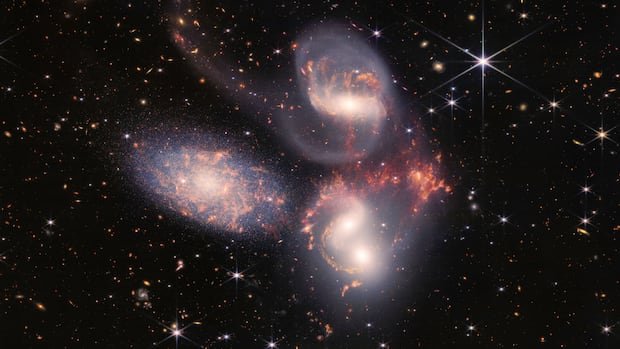
The James Webb Space Telescope, stationed 1.5 million kilometers from Earth, continues to unveil groundbreaking discoveries concerning exoplanet atmospheres, black hole mergers, galactic phenomena, and ancient galaxies. Serving as the largest space telescope, it facilitates astronomical research worldwide, providing unparalleled views of the cosmos.
After a prolonged stay on the International Space Station due to technical issues with the Boeing Starliner spacecraft, American astronauts Suni Williams and Butch Wilmore safely returned to Earth off the coast of Florida in March 2025. Their rescue mission via a SpaceX Dragon capsule marked the end of a challenging space odyssey.
UNESCO designated 2025 as the International Year of Quantum Science and Technology to raise global awareness of quantum computing advancements. This innovative technology, leveraging quantum effects for enhanced data analysis, holds promise for accelerated simulations, particularly in drug discovery and weather forecasting realms.
In summary, 2025 witnessed a spectrum of remarkable scientific advancements, celestial discoveries, and notable events that underscore humanity’s quest for knowledge and exploration in both terrestrial and cosmic domains.