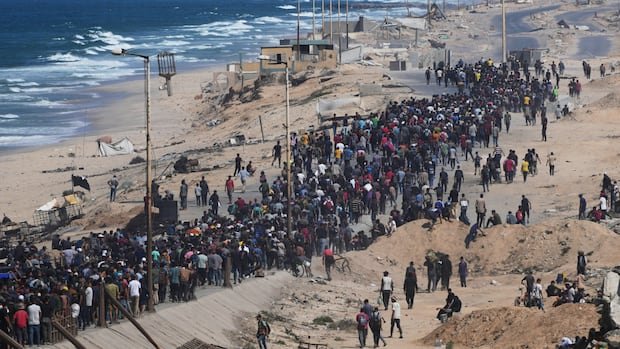

Thousands of Palestinians who were displaced made their way back to their destroyed homes in Gaza as Israeli troops began withdrawing under a ceasefire agreement signaling the end of the conflict. A large group of people walked north along the coast towards Gaza City, the largest urban area in the enclave, which had been heavily targeted in recent Israeli attacks.
Among them, Ismail Zayda, relieved to find his house still standing in Sheikh Radwan, expressed the devastation of the area with destroyed homes and neighborhoods. In another part of Gaza, Khan Younis, once a bustling city, now lay in ruins, with residents salvaging whatever they could, like a man carrying scrap timber for firewood.
As the ceasefire went into effect, President Donald Trump’s peace plan required Israeli troops to withdraw from urban areas within 24 hours. However, Israeli forces were still present in more than half of Gaza. Prime Minister Benjamin Netanyahu emphasized the need for Hamas disarmament for a peaceful resolution.
Hamas spokesperson Hazem Qassem highlighted the importance of defensive weapons for Palestinians but assured trust in the negotiators involved in the peace talks. Meanwhile, rescue efforts intensified in Gaza City, where previously inaccessible areas were being reached, uncovering casualties from previous attacks.
The ceasefire agreement also included the release of hostages and prisoners by both sides. Once Israeli troops pull back, Hamas has 72 hours to release living hostages, while Israel is set to free Palestinian detainees. The war’s toll has led to international repercussions, drawing in regional players like Iran, Yemen, and Lebanon.
The ceasefire deal, lauded as a diplomatic victory for Trump, received backing from various countries. The U.S. pledged military support for Gaza’s stability without deploying ground troops. Despite the challenges ahead, the hope for peace and rebuilding in Gaza remains a priority.
REWRITE_BLOCKED: The requested text is too long to be processed in one submission.