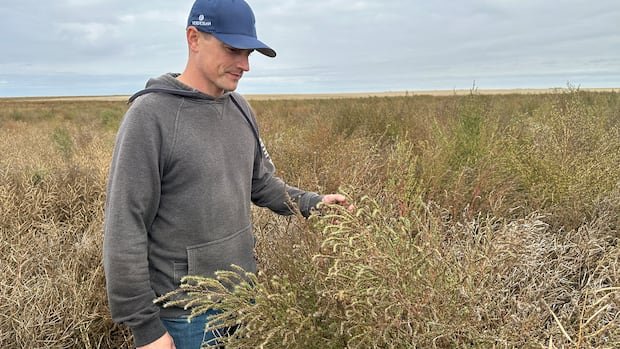

Kochia weeds have taken over Jake Leguee’s family farm near Fillmore, Sask., reaching waist-high in his fields of lentils and flax located around 100 kilometers southeast of Regina. Being highly invasive, a single kochia plant can spawn thousands more, causing significant damage to crops. These weeds are flourishing in drought conditions and are becoming increasingly resistant to herbicides, leading to substantial financial losses for farmers like Leguee.
To combat the spread of kochia, Leguee invests hundreds of thousands of dollars each year in herbicides. Previously, Group 14 herbicides were effective but costly; however, now even these expensive products are failing to eliminate the relentless weeds. In a bid to tackle the issue, Leguee purchased a $100,000 weed exterminator add-on for his combine last year, yet he has not seen the desired results.
In the face of this escalating challenge, experts warn that kochia, once limited to the southern prairies, is rapidly expanding its territory northward. Shaun Sharpe, a scientist specializing in invasive weeds at Agriculture and Agri-Food Canada, notes that kochia has been identified as far north as Blaine Lake in Saskatchewan and in Alberta’s Peace Country region. The northward migration of these weeds is attributed to climate change and deforestation, creating ideal conditions for their spread.
To address the growing problem, scientists like Sharpe are intensifying their efforts. They are conducting research on various kochia variants, educating farmers on species identification, and monitoring other herbicide-resistant weeds like waterhemp and palmer amaranth. These invasive weeds, known for their resilience and ability to spread through various means, pose a significant threat to agricultural productivity in the region.
Despite ongoing efforts, the battle against kochia and other invasive weeds remains challenging. Farmers like Leguee are grappling with reduced yields and increased production costs, jeopardizing their profitability and the sustainability of their operations. As the spread of these weeds continues unabated, the agricultural sector faces an uncertain future, emphasizing the need for innovative solutions and collaborative strategies to mitigate the impact of these pervasive threats on food production.