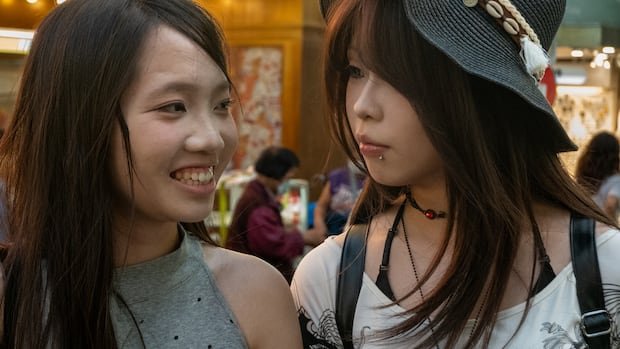

Amid the escalating competition between the United States and China, many residents of Taiwan have found a reliable source of information in podcaster Mindy Huang. Huang, aged 36, interacts with over 80,000 listeners every week on her podcast, “Mindi World News,” where she delves into geopolitics and Taiwan’s intricate relationship with China.
Expressing her insights into her audience’s perspectives, Huang highlighted that most Taiwanese identify themselves as Taiwanese and distinct from China. However, she noted a more receptive attitude towards China among the younger generation in Taiwan.
While China considers Taiwan a renegade province and has expressed intentions to reunify forcefully, Huang and others observe a growing appeal of pro-China narratives on social media, particularly among Taiwanese youth.
Taiwan, despite facing continuous military provocations from China, is leveraging its economic success in technology to boost its international standing and counter Chinese influence. President Lai’s administration is focused on fostering resilience within the population, especially among the younger generations.
The generational gap in perceptions of the China-Taiwan relationship is evident, with younger individuals less alarmed by the potential threat posed by China. Social media plays a significant role in shaping positive perceptions of China among teenagers in Taiwan.
Efforts by China to influence Taiwanese youth through social media have been acknowledged, with concerns raised about their implications for Taiwan’s defense strategies. The long-standing tensions between China and Taiwan trace back to 1949, following the Chinese Civil War.
Young people in Taiwan, when interviewed in popular areas like Ximending, generally express less concern about the possibility of a Chinese invasion or its impact on Taiwan’s democratic values. The success of Taiwan’s tech industry is seen as a factor in mitigating Chinese ambitions towards the island.
Vice-President Hsiao Bi-khim emphasized the challenges posed by China’s social media campaigns and disinformation efforts, calling for collaborative efforts with other democracies to counter such influence operations.
Despite the overwhelming Chinese messaging, Huang pointed out that many young Taiwanese prioritize daily struggles over geopolitical concerns. She advocates for preparedness against a potential Chinese attack, echoing concerns about Chinese President Xi Jinping’s intentions.