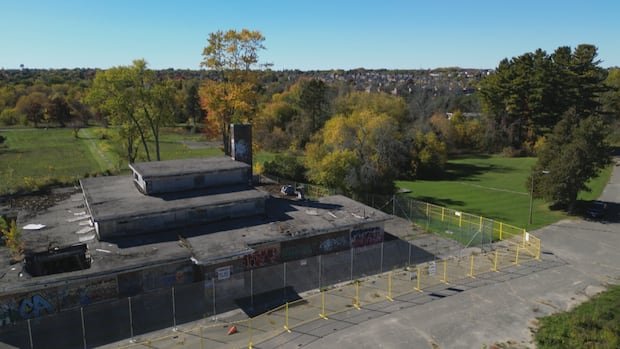

Marilyn Morawetz gazes at the deteriorating walls of an old cafeteria building with admiration for its prairie-style design amidst an industrial backdrop. She expresses concern that the potential loss of the building could lead to the demise of everything around it, emphasizing the significance of preserving it. The 100-year-old structure, part of the historic Camp 30 in Bowmanville, Ontario, closed its doors in 2008 and is now in a state of disrepair along with five other heritage buildings on the site.
Originally serving as a reform school for boys in the 1920s, Camp 30 later became a housing facility for 800 German prisoners of war during World War II. The cafeteria, where the Battle of Bowmanville occurred—a unique three-day revolt using hockey sticks and pipes—is considered the only battle of its kind on Canadian soil during the war. Morawetz, Chair of the Jury Lands Foundation overseeing the site’s preservation, faces a critical juncture as the Clarington council considers the fate of the cafeteria, the only municipally-owned building at the location.
After Clarington took possession of the cafeteria from the Kaitlin Corporation in 2022, options for the building’s future were explored due to the hefty $20 million restoration cost. Demolition stands as the most cost-effective choice, but alternative proposals include temporary stabilization to enhance safety and usability for the community. Morawetz envisions the stabilized building serving as a communal space for the next 20 years, accommodating various events and activities beneficial to local groups.
However, Clarington Mayor Adrian Foster leans towards demolishing the cafeteria and constructing a replica to preserve its historical significance at lower costs. The Jury Lands Foundation opposes this plan, advocating for funding stabilization through community benefits charges and heritage grants. The Kaitlin Corp. has offered to return all remaining buildings and land to the municipality for park space dedication, along with covering demolition expenses if Clarington opts for full restoration.
The settlement offer presents a dilemma for Clarington, which is already grappling with financial constraints in maintaining the cafeteria. Despite concerns about potential budget impacts on other projects, Morawetz believes council members must carefully consider all options before making a decision. The future of the cafeteria will be a focal point of discussion in the upcoming council meeting.