
Welcome to our weekly newsletter focusing on environmental trends and solutions driving us towards a more sustainable future.
Hello, this is Anand. Our team is passionate about discussing eco-friendly practices, and I was intrigued by a unique green burial practice that emphasizes our connection to the Earth.
This week’s highlights include:
– Introduction of coffins made from fungi
– Corporate climate goals facing challenges
– The impact of compostable products turning into litter
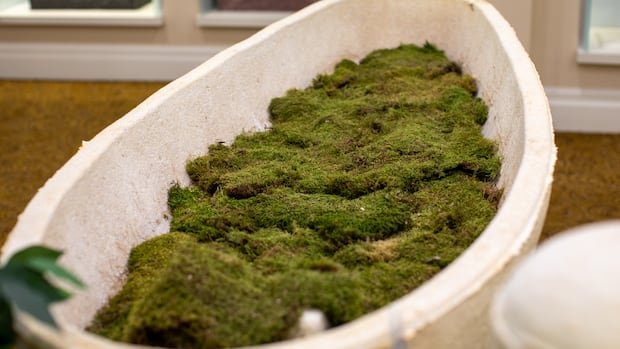
The Meadowvale Cemetery in Brampton, Ontario offers a natural burial area where bodies return to nature, fostering life amid wild growth and buzzing insects. A new eco-friendly option showcased at the cemetery is the Loop Living Cocoon, a $3,750 coffin made from upcycled hemp fibers and mycelium, a fungi root structure known for sustainable properties.
This innovative coffin, designed by Loop Biotech’s Bob Hendrikx, aims to enrich nature by biodegrading in around 45 days, compared to traditional coffins that take decades. The Loop Living Cocoon contributes to soil biodiversity as it decomposes naturally, unlike conventional coffins that may contain harmful chemicals.
Research indicates that traditional death practices, including cremation and burial, have significant carbon footprints. However, recent trends show a growing interest in natural burials as a more environmentally-friendly alternative.
At Meadowvale, the mushroom coffin is positioned as a mid-range option among various coffin choices, emphasizing the importance of aligning personal values with sustainable practices even in death.
The transition to compostable products as a greener alternative to single-use plastics has gained momentum. However, a study by Marketplace revealed that many compostable items do not fully break down in natural environments, raising concerns about their environmental impact.
The experiment demonstrated that only a few compostable products completely decomposed after 14 weeks, highlighting the challenges of managing compostables in municipal waste systems. The lack of standardized composting regulations across cities complicates both consumer choices and product labeling.
As the debate continues on how to address the disposal of compostable items effectively, experts emphasize the need for industry accountability and consumer education on sustainable alternatives like reusable products.
For more details and insights on these environmental topics, feel free to explore our website. Thank you for your interest in environmental sustainability.
This article was originally sourced from: [Source Link]