
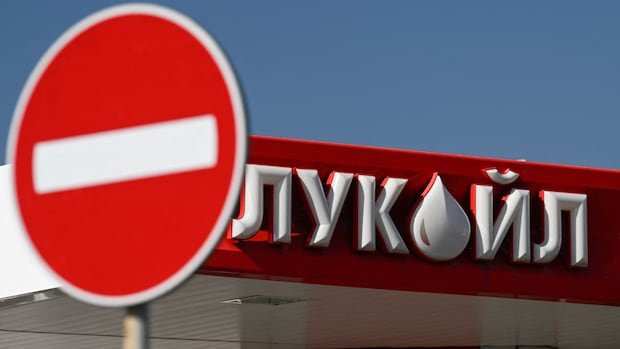

The recent imposition of sanctions by the U.S. Treasury on two major Russian oil producers signifies growing frustration towards Russian President Vladimir Putin’s stance on the conflict in Ukraine. The sanctions targeted Lukoil and Rosneft, accusing them of supporting the Kremlin’s military activities.
These actions led to a surge in global oil prices and raised concerns among Russia’s oil customers. The U.S. Treasury’s sanctions not only affected Lukoil and Rosneft but also extended to more than 30 of their subsidiaries. Together, these companies export over three million barrels of oil daily.
Rosneft, a state-controlled entity led by Putin ally Igor Sechin, is a key player in Russian oil production, accounting for almost half of the country’s output. On the other hand, Lukoil, a privately held corporation, contributes about two percent to global oil production.
The impact of these sanctions goes beyond the two sanctioned companies, as the U.S. Treasury warned of possible actions against financial institutions and others engaged with them. Companies have been given until November 21 to phase out transactions with these oil producers.
Following the full-scale invasion of Ukraine by Russia in 2022 and subsequent energy-related sanctions, Moscow redirected more oil exports towards China and India, its major customers. However, concerns arise as some significant players consider reducing imports due to the risk of secondary sanctions and potential exclusion from U.S. financial markets.
India’s Reliance Industries, a major Russian oil buyer, plans to cut back or halt Russian oil imports. Similarly, Chinese state oil companies have reportedly suspended their purchases of Russian seaborne oil. The threat of secondary sanctions poses different challenges for China and India due to their varying dependence on Russian oil.
In response to these sanctions, Russia expressed anger and dismissal towards the U.S. measures. While some analysts anticipate financial impacts on Rosneft and Lukoil, they believe these sanctions may not profoundly affect Russia’s budget. Despite the challenges, experts foresee adaptations in supply chains to cope with the sanctions.
The international reaction to these sanctions has been mixed. Kuwait’s Oil Minister predicts a rise in oil prices post-sanctions but assures that OPEC can offset any shortage by increasing output. The European Union welcomed the U.S. move and implemented its 19th package of sanctions, including a ban on Russian liquefied natural gas imports and sanctions on Moscow’s fleet.
Ukrainian President Volodymyr Zelenskyy lauded the U.S. sanctions as a strong message against prolonging the conflict and spreading terror. The global community continues to monitor the repercussions of these sanctions on the oil market and geopolitical dynamics.