
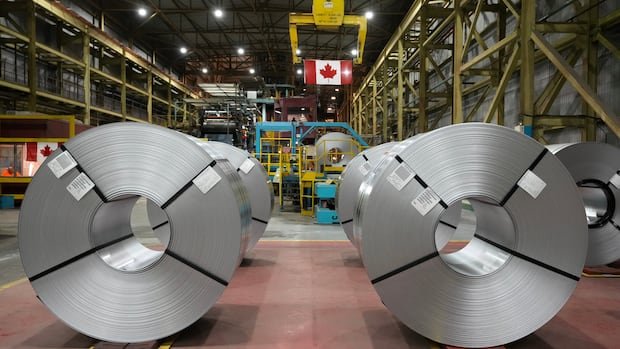

The decision by the Liberal government to exempt certain Chinese and American steel and aluminum imports from retaliatory tariffs is facing criticism. A recent order-in-council revealed that Ottawa has granted relief to numerous Canadian companies, sparing them from the impact of retaliatory tariffs on specific products deemed essential or in short supply.
The Canadian Steel Producers Association is expressing disappointment over these exemptions. Catherine Cobden, the CEO and president, conveyed concerns about the broad exceptions granted to U.S. producers for an additional two months, while Canadian producers continue to face challenges accessing the American market. Cobden finds it troubling that Canada has extended new exemptions to importers of Chinese steel, emphasizing that Canadian producers can substitute this allegedly unfair steel from the market.
The steel industry has persistently urged Ottawa to take a stronger stance against China due to what it perceives as a surge in unfairly traded steel imports. Canada currently imposes a 25 percent tariff on Chinese aluminum and steel. Cobden has also called for doubling the 25 percent retaliatory tariff on American steel to align with the 50 percent tariff imposed by U.S. President Donald Trump on Canadian steel.
Ontario Premier Doug Ford recently urged Prime Minister Mark Carney to retaliate forcefully against the U.S. following the announcement that Stellantis would relocate its Canadian Jeep production to the United States. In response, Carney indicated that he is refraining from immediate retaliation as negotiations with the Trump administration intensify, aiming to secure relief for sectors like aluminum, steel, and energy.
Finance Minister François-Philippe Champagne described the exemptions as a measure to safeguard Canadian workers and families from the adverse effects of countermeasures. International trade lawyer William Pellerin emphasized the importance of exemptions allowing Canadian manufacturers to import foreign steel or aluminum without incurring tariffs, enabling them to produce competitively priced goods in Canada.
Although the exemptions benefit Canadian companies, they also aid some Chinese and U.S. manufacturers. The exact trade value affected remains unclear. Pellerin noted that while the exemptions provide meaningful relief to Canadian firms on a case-by-case basis, they are unlikely to significantly influence broader negotiations with the U.S.
The government has extended exemptions for U.S. products used in food and beverage packaging, as well as for agricultural production. Specific companies across Canada, such as Pizza Trucks of Canada and Pivotech Doors, have received exemptions for importing American goods without tariffs for various projects. Canadian officials, including Champagne and Trade Minister Dominic LeBlanc, are actively engaged in discussions in Washington to advance trade talks.