
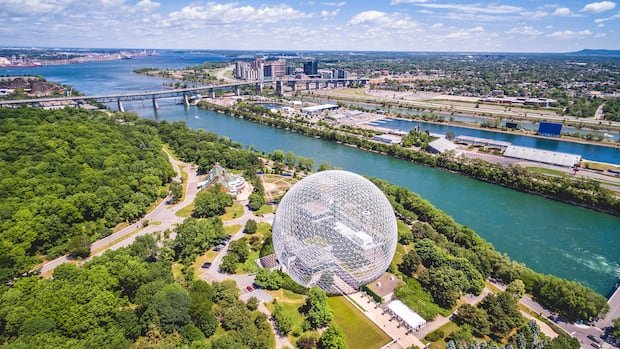

Almost six decades ago, Montreal was the center stage for the 1967 International and Universal Exposition, also known as Expo 67. This event marked the highlight of Canada’s 100th-anniversary celebrations and resulted in significant infrastructure developments within the city. Hosting 62 nations and showcasing nearly 100 thematic pavilions, Expo 67 attracted over 50 million visitors during its six-month duration, propelling Montreal onto the global platform and reshaping the city’s landscape.
Constructed on two man-made islands in the St. Lawrence River, Expo 67’s fairgrounds encompassed Île Ste-Hélène, which was notably expanded to incorporate neighboring Île Ronde and beyond. Additionally, Île Notre-Dame was entirely built within 10 months, utilizing sediments dredged from the river, material from nearby quarries, and landfill from excavations related to Montreal’s new Metro system, inaugurated a year prior to Expo 67.
Some of the iconic remnants of Expo 67 include Moshe Safdie’s iconic Habitat 67 housing complex and Buckminster Fuller’s renowned geodesic dome, which initially housed the U.S. Pavilion and now serves as the Biosphere Environment Museum. Many pavilions and exhibits at the fair were designed to be temporary structures, with some dismantled immediately after the event, such as the Soviet Union pavilion, which was transported back to Moscow.
While some pavilions faced deterioration and removal, others were relocated within Canada or repurposed in their original locations. Notably, the Canada pavilion now functions as a multipurpose venue on the islands managed by the Société Parc Jean-Drapeau. La Ronde, a theme park that gained popularity during Expo 67, has witnessed a decline in the number of original rides, with recent announcements of dismantling attractions like La Spirale due to technical and financial challenges.
Despite the disappearing landmarks, efforts to preserve and commemorate Expo 67’s legacy continue. Initiatives such as an augmented walking tour on the WasteScapes app highlight the architectural remains of Expo 67, including lesser-known sites like the Korean and Tunisian pavilions. Advocates emphasize the importance of historical restoration to honor the transformative moments captured by these structures and foster a deeper connection to the city’s heritage.
As Montreal navigates the preservation and evolution of its Expo 67 heritage, challenges persist in maintaining these landmarks amid financial pressures. While some iconic sites endure, like the children’s area at La Ronde, which features nostalgic rides from 1967, the future of Expo 67 remnants remains a topic of ongoing discussion amidst changing landscapes and economic uncertainties.