
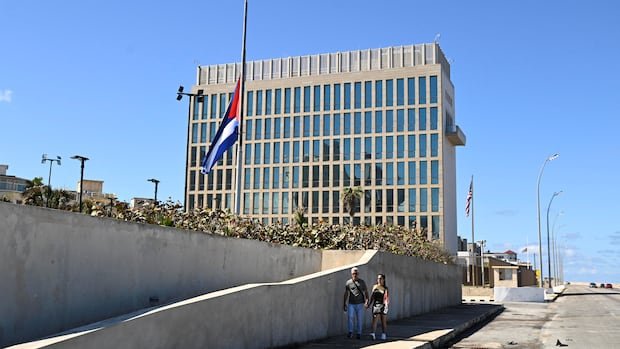

The Cuban government released the names, ranks, and ages of the 32 military members who died during the operation that led to the capture of Venezuelan President Nicolás Maduro by U.S. forces. The announcement was made on Tuesday, declaring two days of mourning.
The deceased individuals included colonels, lieutenants, majors, captains, and reserve soldiers, with ages ranging from 26 to 60. These military personnel were affiliated with Cuba’s main security agencies, the Revolutionary Armed Forces, and the Ministry of the Interior. The specific details of their missions and causes of death were not disclosed.
Cuban state media published information and photos of the fallen soldiers, dressed in olive-green military attire.
Speaking on Tuesday, Cuban Foreign Minister Bruno Rodríguez emphasized the readiness of Cubans to sacrifice themselves against any U.S. intervention as the country contemplates a future without Maduro leading Venezuela.
Rodríguez criticized the U.S. president for his lack of understanding of Cuba and accused him of echoing falsehoods propagated by Cuban-American politicians and other interest groups. He affirmed the Cuban people’s determination to defend their nation against imperialist threats.
In an official statement on Sunday, Cuban authorities acknowledged the deaths of the military personnel who were in Venezuela based on agreements between the two nations.
The statement praised the fallen soldiers for their courage and dedication, highlighting their honorable resistance during the attack.
Emerging Details
Details about the Cuban officers who lost their lives started to surface on Monday night, with public expressions of support for their sacrifice.
Luis Domínguez, the operator of the website Represores Cubanos (Cuban Repressors), expressed his belief that one of the deceased officers, 67-year-old Col. Humberto Alfonso Roca Sánchez, held a significant position as the former garrison commander of Punto Cero, where Fidel Castro once resided.
Another victim, 62-year-old Col. Lázaro Evangelio Rodríguez Rodríguez, was speculated to have overseen Cuba’s coastal and border security operations.
Agreements and Exchanges
Cuba and Venezuela, long-standing allies in economic and political spheres, have collaborated on various agreements, including security and energy partnerships, with Venezuela supplying subsidized oil to Cuba since 2000. However, the extent of their military cooperation has been relatively obscure.
A post on the independent website La Joven Cuba featured a profile of 1st Lt. Yunio Estévez, shedding light on his life and family in Guantánamo province.
The profile detailed Estévez’s role as a communications specialist in charge of personal security, indicating he was shot during the operation. However, it was later reported that the post was removed at the request of his family.