
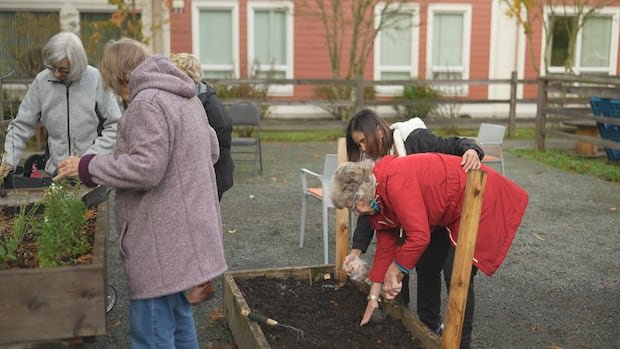

Doreen Freeland, a former “land girl” during World War II in Britain, reminisces about her past experiences working in orchards and farms to support food production while men were at war. Now 94 years old and living with dementia, Freeland finds solace in the outdoors at The Village Langley, a care facility near Vancouver designed like a community with various amenities like a store, hair salon, café, woodworking shop, and a barn with animals.
Diagnosed with dementia five years ago, Freeland now participates in the adult day program at The Village, accompanied by her daughter Gail Deyle, who highlights the positive impact these visits have on her mother’s mood and engagement. Engaging in activities like gardening, feeding chickens, and interacting with animals, Freeland expresses her preference for animals over people.
The Village Langley, established in 2019, houses around 75 residents with various cognitive conditions, with a focus on providing a homely environment rather than institutionalized care. Co-founder Elroy Jespersen emphasizes the importance of offering residents a fulfilling life despite their limitations, drawing inspiration from similar models in Europe.
Researchers from Simon Fraser University and McMaster University are conducting a study at The Village to evaluate the impact of this care setting on dementia patients. The research aims to provide insights into enhancing the quality of life for individuals with dementia through engaging activities like horticulture and animal care.
While The Village’s model shows promising outcomes, affordability remains a challenge for many families, with costs ranging from $10,000 to $13,000 per month. Jespersen hopes that the research findings will pave the way for government funding to make such care more accessible.
Dr. Howard Chertkow, a cognitive neurologist, acknowledges the benefits of farm-style care in promoting social interactions, physical activity, and outdoor exposure for individuals with dementia. However, he stresses the need for robust evidence to secure public funding for such initiatives.
With the prevalence of dementia expected to rise in Canada, combating stigma and promoting inclusion for individuals with dementia is crucial. The Alzheimer Society of Canada highlights the importance of reducing isolation and fostering social connections to enhance the well-being of both patients and caregivers. Freeland and her daughter Deyle appreciate the sense of community and respite that The Village provides, underscoring the positive impact of such care models on individuals living with dementia.