
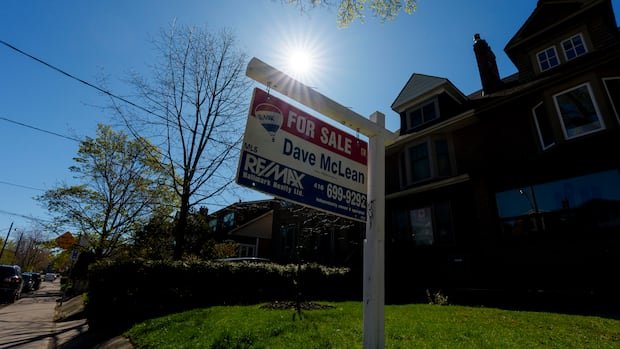

In April, the Canadian Real Estate Association reported a decrease in home sales compared to the previous year, alongside a rise in the average sale price. Total home sales for April stood at 42,927, down by four percent from the 44,698 sales recorded in April 2025. However, on a seasonally adjusted basis, home sales in April increased by 0.7 percent compared to March this year.
Shaun Cathcart, CREA’s senior economist, mentioned that global economic uncertainty and higher mortgage rates have dampened expectations for a strong housing market rebound this year. Despite this, there is still some upward momentum in the market, albeit subdued. Cathcart highlighted that the slow start to April was followed by a more robust performance in May, with decreasing days on the market and stabilizing prices contributing to the market dynamics.
Although there was a slight uptick in activity, sales remain approximately 10 percent below typical April levels. BMO chief economist Douglas Porter noted that the current housing market conditions do not signal a robust recovery.
The national average sale price for a home in April was $695,412, showing a 2.2 percent year-over-year increase. However, CREA’s home price index, which reflects typical home sales, experienced a marginal 0.1 percent decline from March to April and a 4.2 percent drop compared to the same period last year.
New listings in April rose by 4.1 percent month-over-month, marking the traditional start of the spring real estate season. At the end of April, there were 187,647 properties listed for sale across Canada, a 2.2 percent increase from the previous year but 6.1 percent below the long-term average for that time of the year.
Recently, CREA revised its forecast for 2026 home sales activity due to the impact of the oil price shock on mortgage rates. The association now predicts only a one percent growth in transactions compared to the previously anticipated 5.1 percent increase. The national average home price is expected to rise by 1.5 percent annually to $688,955 in 2026, slightly lower than the earlier predictions.
While the gap between listing and sale prices narrowed in April, Cathcart suggested that this could stimulate market movement. However, Porter cautioned that the prevailing consumer caution, coupled with inflation driven by oil prices, has tempered expectations for a significant housing market recovery in the near future.
Regionally, British Columbia, Alberta, and Ontario witnessed year-over-year price declines, offsetting gains in other provinces. Notably, Toronto saw a 6.3 percent decrease in average home prices compared to last year and a 13 percent drop from 2023 prices. Porter emphasized that despite regional variations, overall housing market activity across Canada remains subdued.