
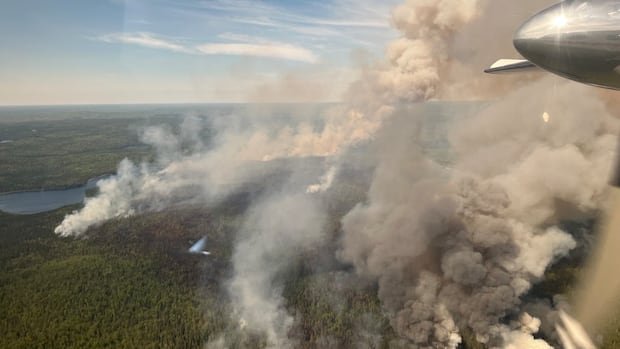

Amid Ontario’s most severe fire season on record, recent research from McGill University highlights the protective role of aspen trees against wildfires.
Flavie Pelletier, the lead author of the study and a PhD graduate, noted that historically, aspen have been recognized for their resilience to fire.
However, Pelletier pointed out the paradox that although aspen have thin bark making them susceptible to quick burning, the research revealed that extensive clusters of aspen can effectively impede the spread of wildfires.
By examining satellite imagery of Canada’s boreal forest post-wildfires, Pelletier and her team observed that larger aspen patches played a significant role in slowing down the advancement of fires.
The analysis showed a higher prevalence of sizable aspen clusters at the edges of burnt areas.
Pelletier discussed several theories explaining the fire resistance of aspen, emphasizing their higher moisture content in comparison to coniferous trees.
Moreover, she highlighted that the positioning of aspen leaves higher up on the trunk, unlike coniferous trees, makes them less susceptible to ground fires.

Last summer, members of Serpent River First Nation protested the use of glyphosate by forestry companies in Ontario. (Jonathan Migneault/CBC)
Challenges Faced by Aspen
Despite the benefits of aspen in fire management, Pelletier highlighted a concerning trend of diminishing aspen populations in commercial forests.
Each summer, forestry companies in Ontario utilize herbicides like glyphosate to eliminate broadleaf vegetation, which competes with commercially valuable coniferous trees.
Pelletier expressed her belief that reducing aspen through herbicide use could heighten the long-term risk of wildfires.
Fred Pinto, a forestry adjunct professor at the University of Toronto, mentioned studies indicating the return of broadleaf trees like aspen post-glyphosate treatment, a process that may take several years.
<p class="