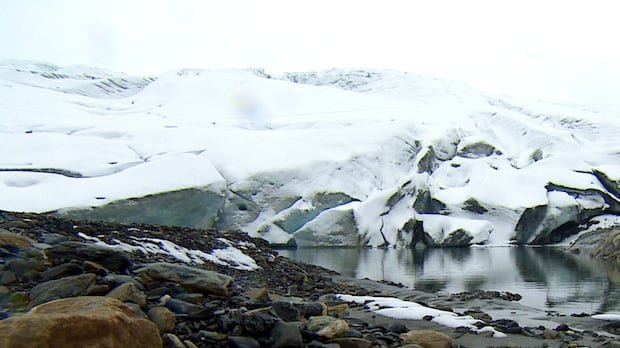

A climate researcher from northern British Columbia has revealed that 2024 was the second worst year on record for glacier loss in western Canada, despite the United Nations designating 2025 as “The International Year of Glaciers’ Preservation.” Brian Menounos, a professor at the University of Northern British Columbia, emphasized that glaciers are rapidly disappearing due to warmer temperatures driven by rising greenhouse gas emissions. Menounos estimated that approximately 30 gigatonnes of glacial ice were lost in the region last year, equivalent to the entirety of B.C.’s Okanagan Lake.
Using satellite and aircraft observation along with on-the-ice sampling, Menounos and an international team have been monitoring global glacial health. Their recently published peer-reviewed study highlighted unprecedented ice loss in Western Canada, the Conterminous U.S., and Switzerland between 2021 and 2024. The study pointed out a significant acceleration in glacier melt, mainly attributed to warmer conditions and reduced late summer snow cover, which affects the reflectivity of glacier surfaces.
Mark Ednie, a glaciologist with the Geological Survey of Canada, emphasized the global trend of shrinking glaciers and emphasized the impact of glacial ice loss on the environment and economy. The loss of glacial ice could lead to water scarcity, affecting various sectors such as industry, agriculture, and human consumption. In British Columbia, where approximately 17,000 glaciers are located, glacier melt also influences river levels crucial for fish runs and hydro power.
Despite commitments from federal and provincial governments to combat climate change, recent initiatives such as building new fossil fuel facilities raise concerns among researchers like Menounos. Balancing economic growth with emissions reduction remains a challenge, highlighting the ongoing debate between the economy and environmental conservation. Menounos stressed the high costs associated with fossil fuel reliance, urging for a more sustainable approach to address climate change.
The ongoing glacier loss calls for immediate action to mitigate the impacts of global warming on these vital natural resources and the ecosystems they support.