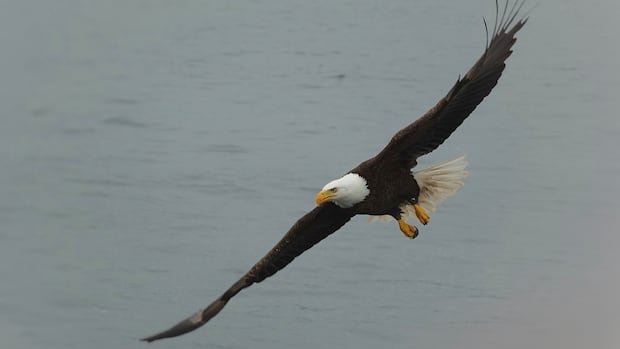

Local naturalist Brian Keating quickly pointed out two bald eagles by the river at Carburn Park in southeast Calgary.
Keating mentioned that this particular pair has been nesting in Calgary for many years, making it almost a guarantee to spot an eagle when visiting the park.
Bald eagles are a common sight in Calgary due to the ideal habitat provided by the Bow River, allowing them to reside in the city year-round.
The iconic birds of prey, known for their distinctive plumage, are increasingly spotted across Alberta as their populations grow and expand thanks to conservation efforts.

Why are bald eagles attracted to Alberta?
From the Bow River to the grasslands, bald eagles can be found in various locations throughout Alberta.
Colin Weir, the managing director of the Alberta Birds of Prey Foundation in Coaldale, noted that bald eagles are expanding their territories across the province, especially along the Prairie rivers, over the past decade.

Weir explained that Alberta’s bald eagle population consists of both year-round residents, like those in Calgary during winter, and migratory birds that nest in places like Banff but spend winters in warmer regions.
He highlighted the exceptional nesting habitat provided by the southern Alberta rivers, with abundant food sources such as fish and migratory ducks.
Bald eagles can also be found in unusual locations, such as fields distant from major water bodies.
Weir mentioned that these birds often linger around agricultural areas where they may scavenge on dead livestock.

Regarding bald eagles in the Calgary vicinity, Keating referenced the latest local Christmas Bird Count results, where over 400 eagles were tallied, a significant increase compared to previous decades.
Keating emphasized that such a rise in numbers was unprecedented years ago.
A Conservation Triumph
NatureCounts indicates that bald eagle populations have been on the rise across North America based on citizen science data.
The recovery of the population largely followed the bald eagle’s endangered species designation by the United States government in the 1970