
It’s only the beginning of 2026, and amidst the current events, an unexpected concern arises – exploding trees? Really?
Not exactly.
A severe cold snap has gripped much of Canada and the northern U.S., with temperatures dropping below –20 C, and in some areas, reaching as low as –40 C with wind chill in the upcoming days.
While residents in these regions prepare for the extreme cold brought on by a disturbance in the polar vortex pushing frigid Arctic air southward into the U.S., a social media post went viral, suggesting that temperatures in seven states, from North and South Dakota to Michigan, could be cold enough to cause trees to explode.
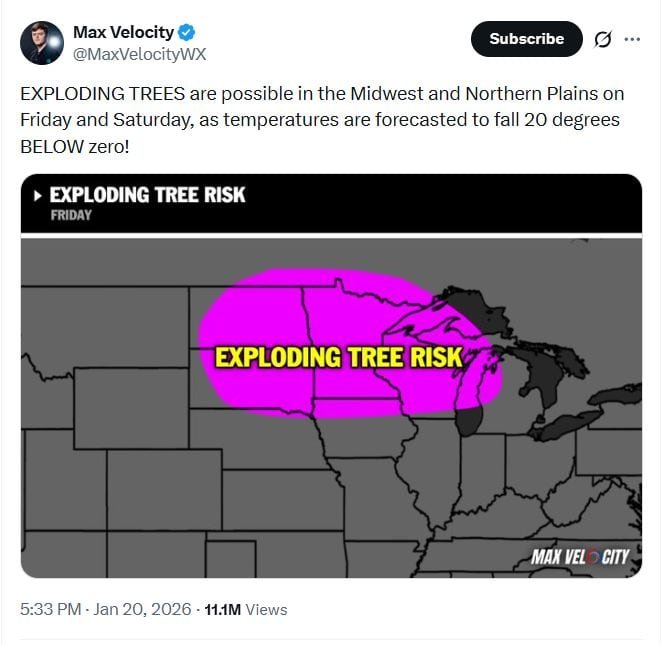
The approaching cold spell poses serious risks to the public and is expected to contribute to a significant and potentially hazardous storm spanning nearly 30 states from Friday to Monday, but not necessarily resulting in trees spontaneously exploding.
Responding to concerns, Minnesota’s Department of Natural Resources clarified in a Facebook post that there is no need to avoid wooded areas to evade this supposed risk.
However, the notion of “exploding trees” in the extreme cold is not entirely baseless. Here’s a brief overview of the potential risk and how extreme temperature fluctuations can lead to such occurrences.
How Does This Happen?
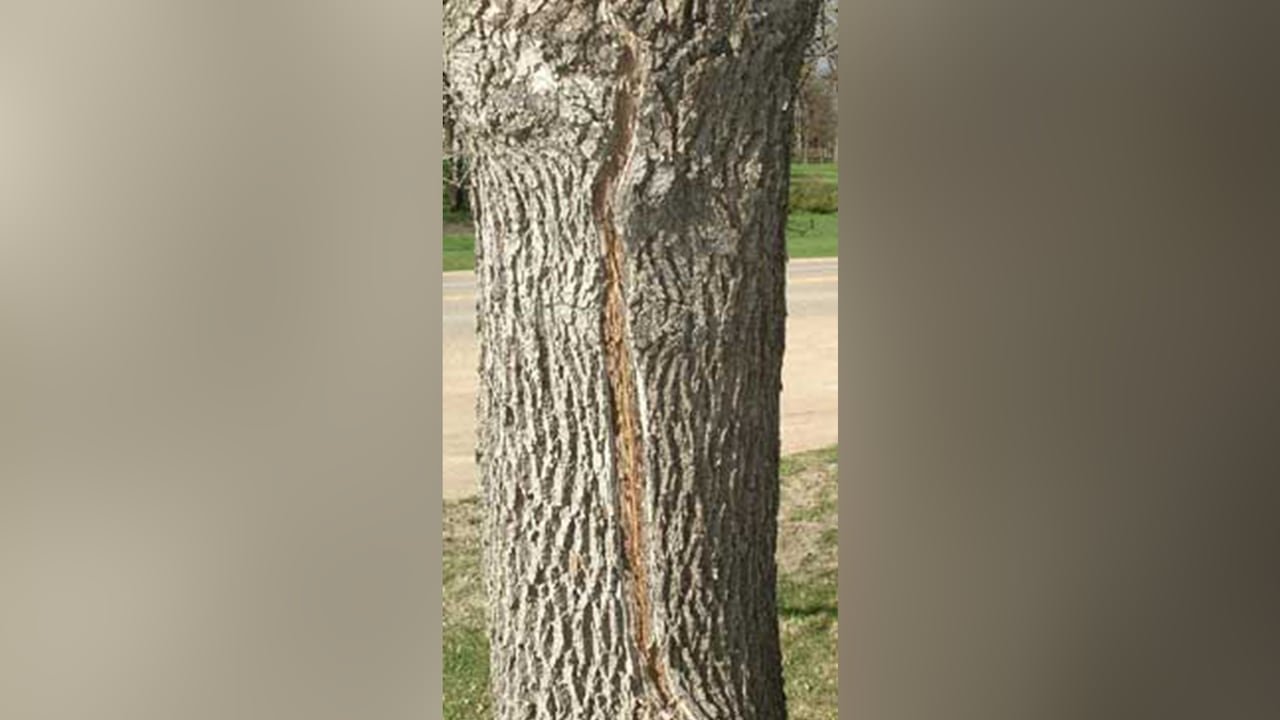
According to Simon Peacock, an ISA-certified arborist at Green Drop Tree Care in Winnipeg, when temperatures drop significantly and abruptly, it can trigger frost cracks, a phenomenon more common in trees with thin bark, particularly observed in the Prairies.
These vertical splits, sometimes spanning the trunk’s length, can produce a loud sound resembling an explosion.
Bill McNee, a forest health specialist with Wisconsin’s Department of Natural Resources, explained that the rapid freezing of water and sap within the tree due to the sudden cold causes expansion, similar to ice cubes in a freezer, leading to the tree splitting and branches breaking off.
Peacock mentioned that while the break doesn’t harm the tree and will mend when warmer temperatures return in the summer, repeated cracking and healing can result in a lasting “frost rib” or scar on the trunk.
If a crack is deep enough, Peacock warned of potential bacterial infestation causing wood decay, advising consultation with a certified arborist to address the issue.