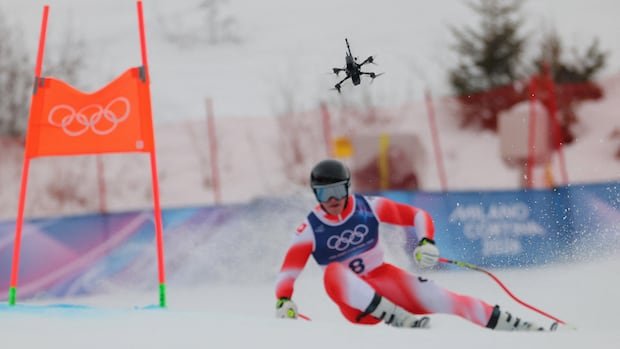

In the finals of the freeski slopestyle event at the Winter Olympics, Canadian athlete Megan Oldham secured an Olympic bronze medal during her final run. A notable addition to the broadcast was the presence of a buzzing drone closely following Oldham, providing viewers with a unique perspective courtesy of the Olympic Broadcasting Services.
The use of first-person view (FPV) drones has garnered attention from viewers across various Olympic events, offering dynamic footage that captures the speed and intensity of the athletes’ performances on the slopes and tracks. These advanced drones, capable of high speeds and intricate maneuvers, have become a highlight of the Olympic coverage.
While drones have been utilized in the Olympics since 2014, the introduction of FPV drones marks a new era in capturing the action from up close. Operated by skilled pilots equipped with headsets and controllers, the drones have been integral in providing immersive coverage, from tracking downhill skiers to navigating tight luge tracks.
Despite the technical challenges involved, including reaching speeds of up to 75 km/h and maneuvering through diverse terrains, the drone teams have successfully enhanced the viewing experience for spectators worldwide. The meticulous planning and execution required for seamless drone coverage have been a testament to the dedication of the teams behind the scenes.
One notable aspect of the drone coverage that has sparked discussion is the noise generated by the drones during the events. Some viewers have likened the buzzing sound to the vuvuzelas of the 2010 soccer World Cup, with the drone blades’ rotation becoming a prominent feature in the audio backdrop.
Athletes have also shared their reactions to the drone presence, with mixed reviews regarding the proximity and angles captured by the drones. While some have expressed concerns about the distractions caused by the drones, many have acknowledged the innovative and engaging nature of the aerial footage.
According to Pierre Ducrey, the sports director of the International Olympic Committee, the integration of drones into the Olympic coverage represents a significant evolution in enhancing the audience’s engagement with the games. While the unconventional aspects of drone usage may require an adjustment period, the unique perspectives offered by the aerial footage have added a new dimension to the Olympic viewing experience.