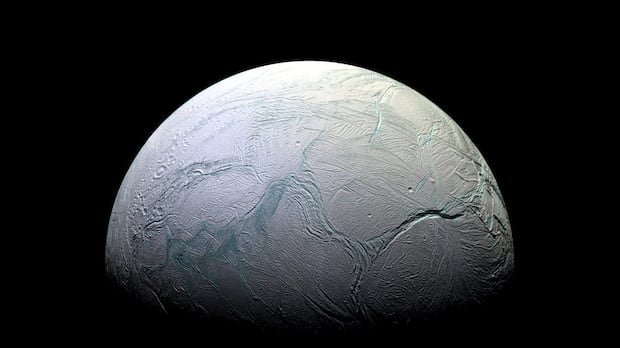

A recent study by scientists revealed the presence of new types of organic compounds in icy geysers erupting from Enceladus, one of Saturn’s moons. These findings, based on data collected by NASA’s Cassini spacecraft in 2008, suggest that Enceladus could potentially provide a suitable environment for life due to its hidden ocean and active water plumes near the south pole.
While the moon is considered habitable, the existence of life remains uncertain. Fabian Klenner from the University of Washington emphasized the distinction between habitability and actual presence of life.
Researchers conducted a detailed analysis of small ice grains sampled by Cassini as it passed through the moon’s geysers. These freshly collected grains exhibited different characteristics compared to older particles found in Saturn’s rings, indicating a younger age.
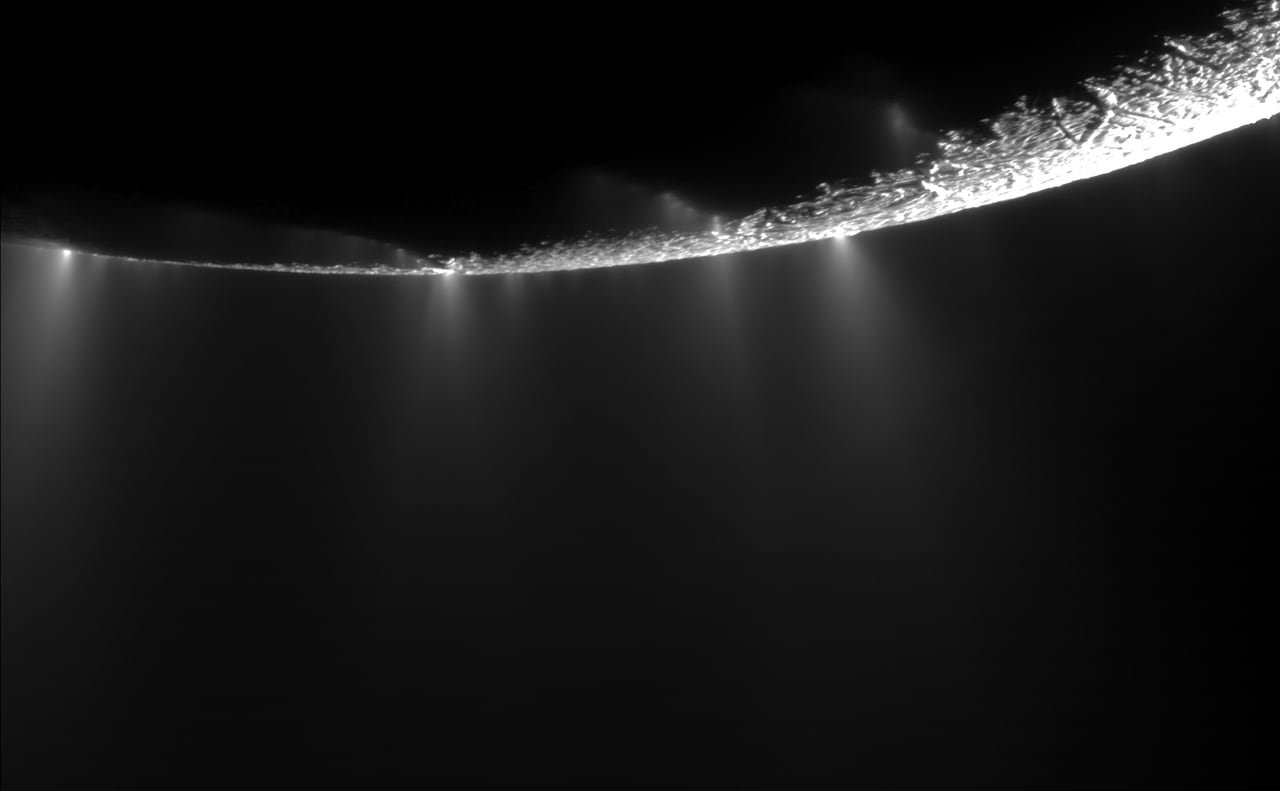
The new ice grains, traveling at higher speeds, allowed scientists to identify a variety of chemical compounds, including organic molecules. This discovery supports the theory that these compounds originated from Enceladus’s subsurface ocean.
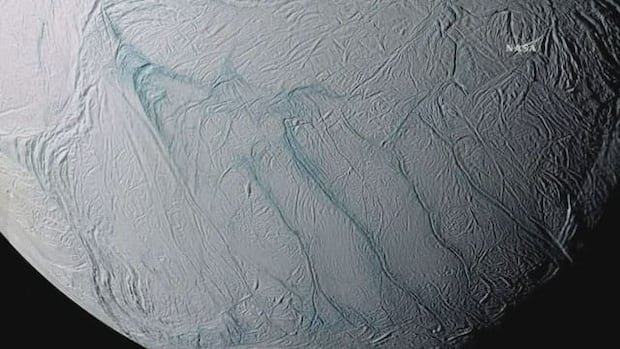
The small moon, encapsulated in ice and with a rocky core, is believed to host hydrothermal vents similar to those found in Earth’s Arctic region. The continuous jets of water vapor and frozen particles emanating from Enceladus extend over great distances into space, enhancing its potential habitability.
Researchers advocate for future missions to explore Enceladus further, following the success of the Cassini mission. As plans for new exploratory missions take shape, the scientific community remains intrigued by the possibility of finding extraterrestrial life within our own solar system.
With ongoing missions to explore other celestial bodies like Jupiter’s moon Europa, the quest for understanding the potential for life beyond Earth continues. The European Space Agency and NASA are actively planning missions to investigate the conditions on Europa and other icy moons that may harbor subterranean oceans.
Professor Nigel Mason from the University of Kent emphasizes the importance of studying moons with underground oceans as potential sites for extraterrestrial life. The recent findings from Enceladus further underscore the necessity of continued exploration in our quest for discovering life beyond our planet.
<a href="https://www.cbc.ca/news/science/saturn-enceladus-life-1.7648145" target="_blank" rel="noopener