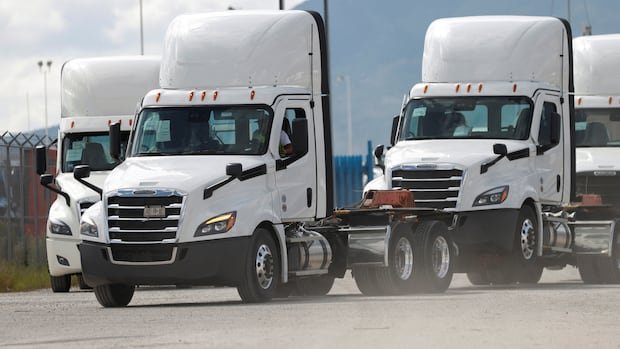

A new set of tariffs on heavy trucks and buses is now in effect, causing concern among industry insiders about the impact on Canadian manufacturers of these vehicles. Effective immediately, foreign imports of medium and heavy-duty trucks and truck parts bound for the U.S. will face a 25 percent tariff, while buses will be subject to a 10 percent tariff. However, there are exemptions for trucks traded under the Canada-U.S.-Mexico Agreement, with the 25 percent tariff only applying to non-American parts.
The rationale behind these tariffs, as stated by U.S. President Donald Trump and his administration, is to address national security risks associated with dependence on imported trucks, parts, and buses. This move is expected to create challenges for companies like Edison Motors in Golden, B.C., which trade vehicles and parts between Canada and the U.S. Edison Motors’ President and Founder, Chace Barber, expressed disappointment over the new tariffs, highlighting the impact on their business operations.
Barber emphasized the increased difficulty in selling to the U.S. market, foreseeing significant cost implications due to the tariffs. He mentioned that passing on these additional costs to customers is unavoidable, as absorbing them would not be financially viable for the company. The trucking industry is already facing difficulties, with heavy truck and bus production constituting a relatively small sector in Canada.
Despite the sector’s size, the repercussions of these tariffs are significant for the approximately 20,000 individuals employed in this industry nationwide. Companies like Paccar, a Quebec-based truck manufacturer, have already announced layoffs in response to the economic uncertainty stemming from the tariffs. The impact of these measures extends beyond the companies themselves, affecting workers and their families across various communities in Canada.
The tariffs also compound existing challenges posed by duties on steel and aluminum, essential materials in vehicle production. Saibal Ray, a supply chain management professor at McGill University, highlighted the cumulative impact of these tariffs on smaller manufacturing industries like truck production. The higher production costs incurred by these industries could potentially lead to closures, particularly in regions like Quebec where truck and bus manufacturing play a significant role in the economy.
Looking ahead, industry experts suggest that promoting domestic manufacturing through initiatives like a “Buy Canadian” campaign could help mitigate the adverse effects of these tariffs on the truck and bus sector. Barber from Edison Motors remains optimistic about the Canadian market, emphasizing the demand for heavy equipment in resource-based industries within the country. Adapting to the new trade landscape, companies are reassessing their business strategies to navigate the challenges posed by these tariffs.