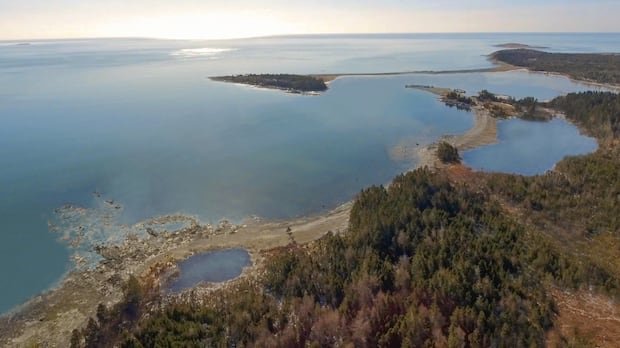

A group of property owners in the eastern part of Nova Scotia has voiced their disapproval for a groundbreaking initiative to establish North America’s inaugural coastal sanctuary dedicated to retired whales from amusement parks. However, their objections regarding how the venture secured authorization from the province sharply contrast with the sentiments of two other landholders who claim widespread endorsement for the project beyond their small coastal community.
Recently, the government of Nova Scotia granted a 20-year lease to the U.S.-based Whale Sanctuary Project for 83 hectares of Crown lands and coastal waters in Wine Harbour, N.S., marking a significant advancement for the long-delayed, privately funded endeavor. The spotlight shone on this project globally when the owners of the closed Marineland theme park in Ontario disclosed challenges in sustaining their 30 belugas after being disallowed a federal permit to sell the whales to China. This raised speculation about potentially relocating some of the belugas to the proposed sanctuary in Nova Scotia. However, construction has yet to commence at the site, announced five years ago, as it still awaits multiple permits and substantial fundraising to cover the $20 million budget.
In Wine Harbour, a quaint seaside village around 150 kilometers east of Halifax, some opponents of the project have emerged to argue that Premier Tim Houston and his cabinet neglected a provincial policy stipulating that a Crown lease cannot be granted without unanimous consent from affected landholders. Tracy Burns-Gagnon and her sister Maureen Fraser, representing families with vested properties, penned a formal complaint to Houston, expressing their outrage over the decision. They emphasized that granting the lease without unanimous consent was unjust and disregarded the interests of local property owners, potentially impeding their ocean access for activities like fishing and boating if the sanctuary materializes.
Burns-Gagnon and Fraser underscored that assuming widespread community support for the project in Wine Harbour would be inaccurate, noting that prominent landowners and long-time residents are against it. Their family, the Burns family, has deep roots in the area, with multiple generations residing there, including their mother and aunt who are year-round residents, and many family members owning cottages in the vicinity.
While the project has garnered local backers within Wine Harbour and the wider Municipality of the District of St. Mary’s, Tammie Vautour, a local business owner and resident of Wine Harbour since 2013, highlighted the project’s substantial opposition among those associated with Burns-Gagnon and Fraser. Vautour emphasized the necessity of the project for the community’s prosperity and sustainability amid challenges like population aging and limited economic opportunities.
Supporters of the initiative, like Jake Chisholm, a property owner and real estate agent in Wine Harbour, advocate for the project as a means to shield the area from adverse development and mining activities, viewing it as a pivotal opportunity for economic revitalization and environmental conservation. Chisholm and others envision the sanctuary as a beacon of learning and a historic milestone for the region.
The Whale Sanctuary Project has received endorsements from various quarters, including the Assembly of Nova Scotia Mi’kmaw Chiefs and a panel of esteemed whale and dolphin experts from across the globe, fostering optimism for its realization. Proponents like Chisholm and Vautour believe that the sanctuary could usher in a new era of ecotourism, aligning with sustainable development goals and bolstering the region’s appeal to visitors.
In conclusion, the Whale Sanctuary Project’s journey in Nova Scotia reflects a complex interplay of divergent viewpoints, community aspirations, and environmental stewardship, underscoring the intricate balance between economic progress and conservation efforts in the evolving landscape of rural Nova Scotia.