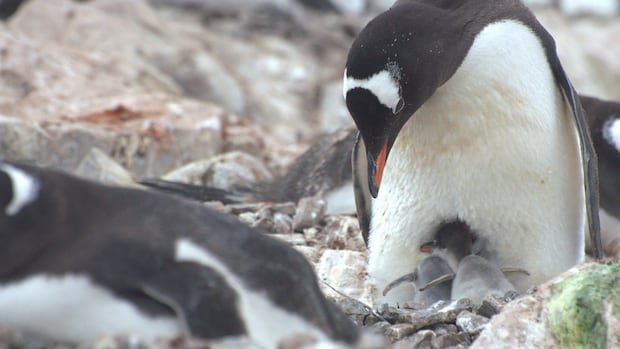

Penguins residing in Antarctica are altering their breeding patterns at an unprecedented rate to cope with escalating temperatures linked to climate change, according to a comprehensive study spanning a decade. The research, detailed in the Journal of Animal Ecology, examined three penguin species and revealed distinct rates of adaptation based on their unique characteristics and susceptibilities.
Leading the adaptation charge are Gentoo penguins, a species more adaptable to varying conditions as they can consume fish in addition to krill and remain near their nesting areas throughout the year. Their breeding season has notably shifted by an average of 13 days, marking one of the most rapid changes observed in any vertebrate species.
On the other hand, chinstrap and Adélie penguins, reliant on krill for sustenance and undertaking extensive migrations ranging from hundreds to thousands of kilometers annually, exhibited an average shift in breeding seasons of 10 days. The study, spearheaded by Ignacio Martinez from the University of Oxford, utilized a network of 77 time-lapse cameras to monitor these penguin species across the Antarctic region, encompassing 37 colonies scattered across the Antarctic Peninsula and nearby islands.
Despite the remarkable speed at which penguins are adapting to the changing climate, the disparity in adaptation rates among species raises concerns about potential conflicts over territory and resources in the future. While the Gentoos appear to be gaining an edge by establishing new colonies and bolstering their populations while the other species decline, the overall outlook for penguins remains bleak.
The broader implications of these findings extend beyond penguins, as various species worldwide are also adjusting their breeding and migration patterns in response to climate change. A recent study published in Nature Communications analyzed data from 75 bird, mammal, and reptile species, revealing an earlier shift in activities like egg laying, particularly pronounced in species inhabiting regions closer to the poles.
Viktoriia Radchuk, the lead author of the study, emphasized that despite the timing changes in migration and breeding, populations of species generally remained stable, indicating an ability to adapt to the evolving climate. While the impact of the shift in breeding seasons on penguin populations of different species remains uncertain, Martinez and his team aim to delve deeper into this aspect in their future research.