
Despite endorsing Hamas’s elimination of rival gang members to reinforce its control over security, U.S. President Donald Trump also demanded the disarmament of the Palestinian militant group. On Monday, Hamas released the final Israeli hostages from Gaza, while Israel repatriated Palestinian detainees under a ceasefire mediated by Trump. However, Hamas has not publicly committed to relinquishing its weapons.
During a meeting with Argentine President Javier Milei at the White House, Trump warned that if Hamas does not disarm voluntarily, the U.S. will forcibly disarm them swiftly, possibly through violent means. Trump claimed that Hamas had agreed to disarm following his 20-point peace proposal.
Since returning from visits to Israel and Egypt, the prospects for Trump’s peace initiative have dimmed. Israel has restricted aid entry into Gaza and sealed the territory’s borders. Meanwhile, Hamas fighters have demonstrated their authority by executing individuals in public as a show of force.
In a bold display of their resurgence, Hamas fighters executed alleged collaborators with Israeli forces in Gaza City. Reports confirmed the incident, which was verified through satellite imagery. Tensions escalated as clashes between Hamas fighters and rivals resulted in numerous casualties, according to Palestinian security sources.
While some Gazans condemned the public executions, others expressed mixed sentiments. The community remains divided, with opinions ranging from advocating for justice for alleged traitors to seeking leniency.
The challenges in implementing Trump’s ceasefire plan have become more apparent, with Israel maintaining its presence in Gaza and aid deliveries falling short of expectations. Efforts to establish an international military force for Gaza and a new governing body have yet to yield substantial progress following a summit hosted by Trump in Egypt.
Hamas has reaffirmed its authority in Gaza, with fighters resurfacing in the streets post-ceasefire. The group has initiated clearing operations to facilitate access to damaged infrastructure and enhance aid distribution. Security measures are being reinforced to safeguard aid routes and ensure the safe passage of humanitarian assistance.
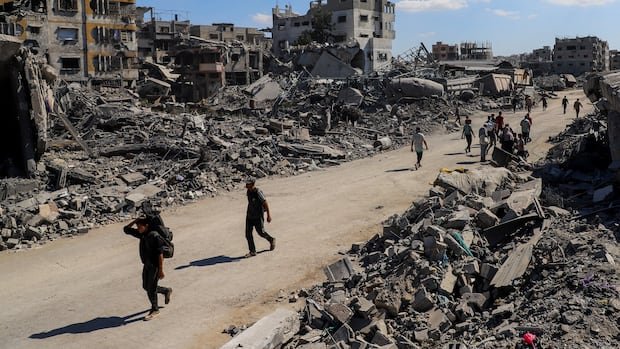
The ceasefire has halted the devastating conflict in Gaza that began after the 2023 attack by Hamas-led gunmen. The conflict has claimed thousands of lives and left Gaza in ruins, with reports of famine in the region.
Israeli Prime Minister Benjamin Netanyahu has emphasized that the war cannot end until Hamas disarms and relinquishes control of Gaza, a condition rejected by the group. While the ceasefire has brought a temporary respite, the path to a lasting resolution remains uncertain.
Hamas has warned against disorder in Gaza and vowed to crack down on violators, including collaborators, looters, and drug dealers. The group’s reemergence signals a shifting dynamic in the region, underscoring the complexities of achieving lasting peace in the conflict-ridden territory.