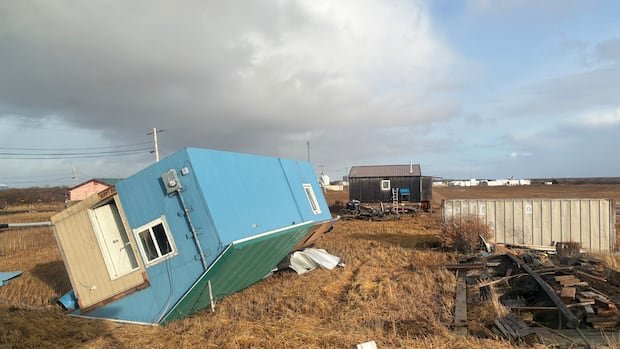

Severe weather conditions from the remnants of Typhoon Halong in western Alaska have led to the death of one person and the disappearance of two individuals. The region experienced hurricane-force winds, storm surges, and flooding that resulted in the destruction of homes. Authorities have reported that over 50 people have been rescued, with some being saved from rooftops. Officials have emphasized the need for ongoing support for the most affected communities, as the road to recovery will be long.
Describing the situation as “absolute devastation,” U.S. Coast Guard official Capt. Christopher Culpepper highlighted the impact on the villages of Kipnuk and Kwigillingok. Alaska State Troopers confirmed the rescue of at least 51 people and two dogs in these areas, which faced significant storm surge according to the National Weather Service.
In Kwigillingok, a woman was found deceased, and two individuals are still missing. While there were earlier reports of missing persons in Kipnuk, the troopers later confirmed that no one was unaccounted for in that village. Most residents in both communities sought shelter in local schools during the crisis.
Kwigillingok, with around 380 residents, is located on the western shore of Kuskokwim Bay near the mouth of the Kuskokwim River. The vulnerability of this low-lying region to flooding has been a concern, with a 2022 report from the Alaska Institute for Justice indicating an increase in the frequency and severity of flooding in recent years. The report identified the urgent need for community relocation.
Aside from housing issues, residents in the affected region reported challenges such as power outages, lack of running water, damage to food stores, and home-heating equipment. The damage caused by the storm may make the upcoming winter difficult for these remote communities that rely on stored food from hunting and fishing.
Local residents shared their harrowing experiences during the storm. Jamie Jenkins, a resident of Napakiak, described the extreme winds and rising waters that she and her family faced. Jenkins recounted how her mother’s house shifted on its foundation, prompting them to seek refuge in a nearby school along with other community members. Adaline Pete from Kotlik mentioned the unprecedented strength of the winds, with an unoccupied house next to hers being overturned.
Government officials, including Gov. Mike Dunleavy and U.S. Senators Lisa Murkowski and Dan Sullivan, discussed the importance of climate resilience and infrastructure funding for Alaska during a news conference. They emphasized the need for timely action to address the increasing frequency and intensity of storms in the region due to climate change.
The Federal Emergency Management Agency’s decision to halt a disaster risk mitigation program earlier this year has raised concerns, especially with the escalating threats of erosion and melting permafrost in Alaska. Murkowski stressed the time-sensitive nature of erosion mitigation projects, urging swift action to combat the impacts of climate change on the state’s infrastructure and communities.