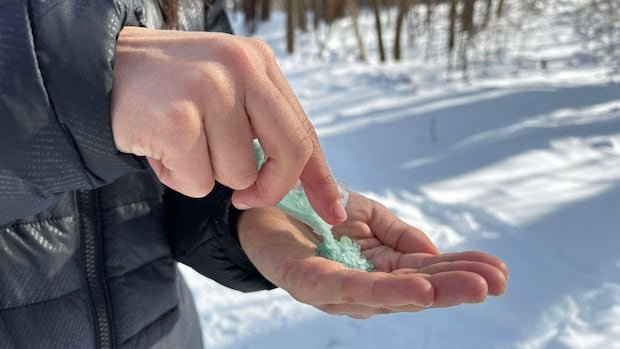

Researchers at Western University are currently investigating alternative methods to melt road ice due to a shortage of road salt in southwestern Ontario. The study, initiated in 2022, is expected to unveil its findings later this summer. The research involves testing nine different substances to assess their effectiveness in melting road ice under various conditions.
Christopher Power, an associate professor at Western University leading the study, highlighted the prevalence of sodium chloride (rock salt) as the primary de-icing agent used by Ontario municipalities, mainly due to its cost efficiency. However, Power emphasized the drawbacks of rock salt, including its corrosive nature and environmental impact, as it contributes to salinization of water bodies like rivers and the Great Lakes.
The study aims to identify alternative ice-melting substances that are both effective and less harmful to the environment. While rock salt remains a popular choice due to its affordability, Power suggested that supplementing it with less corrosive options could be a more sustainable approach, especially in sensitive areas like bridges and water bodies.
Despite ongoing budget constraints faced by municipalities, the research findings may lead to a shift towards adopting more environmentally friendly de-icing solutions. Some municipalities, such as the City of London, are already exploring alternative substances like sand-salt mixes to tackle winter road maintenance in the face of the road salt shortage. Joel Gillard, London’s division manager of road operations, emphasized the need for a diversified approach to road-clearing methods to address the limitations of traditional salt-based solutions in extreme cold conditions.