
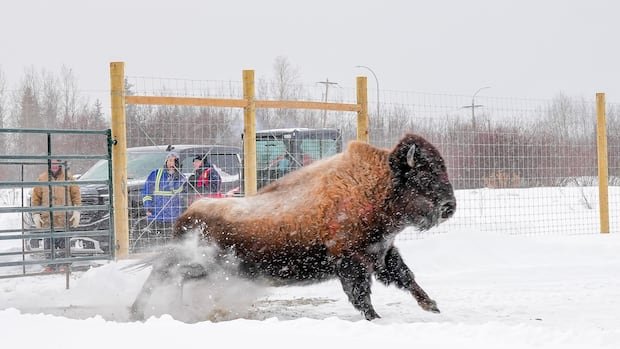

In northeastern Alberta, the sound of hooves clattering against metal and snow resonated through a raging blizzard at a Métis-operated ranch. Twenty shaggy wood bison burst out of a metal shipping container one by one, dashing into a fenced area of the boreal forest. Amid the snowy whirlwind, there were embraces, cheers, and celebratory high-fives as the herd vanished into the landscape. This marked the first bison stampede, a controlled event, at the Willow Lake Métis Nation in approximately 120 years.
Around 30 elders and leaders from the community warmly welcomed the relocated herd from Elk Island National Park. The bison now call a ranch managed by the Métis community near Anzac home, situated about 50 kilometers southeast of Fort McMurray.
Robert Cree, an elder from the nearby Fort McMurray 468 First Nation, expressed his joy, saying, “It’s so nice and humbling to see. I’m glad I’m part of it. I’m glad they’re back home.” He reminisced about buffalo roaming the area in years past, echoing his grandfather’s stories. He expressed gratitude for the bison’s return to their traditional lands.
Describing the ranch’s establishment as a historic milestone for both the Indigenous community and the animals, Métis leaders emphasized the significance of the event. Kyle Whitford, an Indigenous guardian employed by Willow Lake Métis Nation, emphasized the herd’s importance for food sustainability, stating, “It’s bringing the wood bison back to Wood Buffalo. I’m very excited and very relieved now that they’re at their home, which they’ll love and enjoy because we built it with love.”
The bison herd forms part of Willow Lake’s $50-million, multi-year food sustainability initiative. Occupying 16 hectares of the 82-hectare ranch, the bison will coexist with hens, honey bees, greenhouses, hydroponics, and community gardens in the future. Matthew Michetti, overseeing government and industry relations for Willow Lake, highlighted the project’s role in kickstarting agriculture and tourism ventures while contributing to achieving sovereignty by influencing the environment positively.
Future plans encompass cultural and tourism activities such as an Indigenous medicine walk, educational collaborations with schools, and the construction of a visitors’ center. Stella Lavallee, president of Willow Lake Métis Nation, expressed excitement about involving elders in the bison harvest to provide immediate sustenance to Métis families while passing on invaluable skills to younger generations.
With guidance from Nathaniel Ostashewski, owner of Cyrus Bison located over 400 kilometers away in Bonnyville, Alta., Willow Lake aims to expand its ranching endeavors. Ostashewski foresees the herd’s growth, attributing it to the fertile conditions provided by neighboring Gregoire Lake’s humid environment and the prolonged northern summer sunlight. As the bison tread the muskeg, their hooves will enhance the soil’s aeration and reintroduce moisture and nutrients, fostering a vibrant prairie ecosystem. Ostashewski emphasized the environmental benefits of bison flourishing in Alberta, highlighting the positive impact on the region.
The reintroduction of bison to the area signifies a step towards enhancing food sovereignty and embracing a more sustainable lifestyle. Feather Bourque-Jenner, Willow Lake’s director, emphasized the project’s potential to alleviate food and living expenses in the northern regions.