
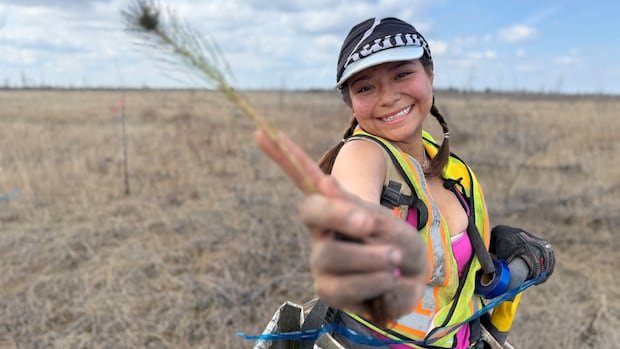

Marley Moose, a 22-year-old participant in a tree-planting crew in northern Manitoba, is dedicating her third summer to restoring forests decimated by wildfires. The cancellation of a federal initiative aimed at planting two billion trees by 2030 has heightened the challenge of their mission.
The forest in Manitoba’s Interlake region, previously devastated by a jack pine budworm infestation in 2016, faced further destruction from wildfires in 2021 in the Devils Lake area. Moose, involved in a tree-planting program led by Nekoté LP, expressed a deep connection to the land and emphasized the importance of environmental stewardship by Indigenous communities.
The Canadian Tree Nursery Association (CTNA) highlighted the rapid loss of trees in Canada due to various factors, including wildfires and industrial activities. The 2 Billion Trees Program, initiated by former Prime Minister Justin Trudeau, aimed to address this issue but was recently scrapped by the current government to allocate resources to other sectors.
With the cancellation of the program, tree-planting initiatives like the one organized by Nekoté LP are facing uncertainty. The CTNA underscored the urgent need to replant trees in wildfire-affected areas to support natural regeneration processes. Canada has experienced consecutive severe fire seasons, contributing to environmental challenges and carbon emissions.
Efforts are underway to secure alternative funding sources for tree-planting projects, such as the one managed by Nekoté LP in Manitoba’s Devils Lake region. Project managers like Farron Sharp are seeking support to achieve ambitious tree-planting goals and promote sustainability. The importance of reforestation as a response to climate change and ecosystem degradation was emphasized by industry experts and participants like Moose and Sharp.
Despite the physical demands of tree-planting work, Moose and her team remain committed to restoring forests for future generations to enjoy. The impact of sustainable practices in mitigating environmental damage caused by human activities and climate change was underscored as a critical aspect of ongoing conservation efforts.