

Kejimkujik National Park in Nova Scotia has decided to halt its annual brook trout census due to the negative impact of an invasive species on the local ecosystem. The census, which was initiated in the 1990s by volunteer fly fishers to assist Parks Canada in monitoring brook trout populations, has been put on hold for this year.
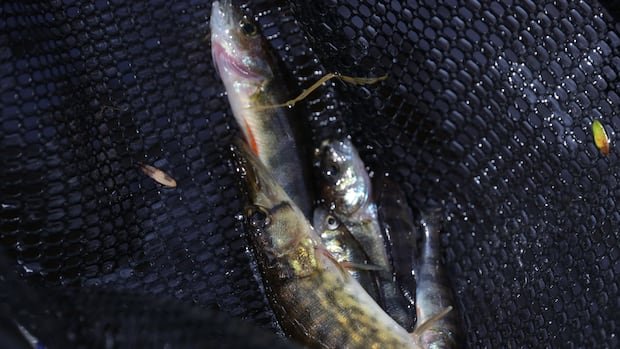
Parks Canada revealed that the chain pickerel, an invasive species, made up 90% of the fish caught in 2025 at the national park in western Nova Scotia. The agency stated that the presence of chain pickerel has significantly reduced the number of brook trout counted in the census, making it insufficient for accurate monitoring purposes.
Chain pickerel were introduced illegally into Nova Scotian waters in 1945 and have since spread to various water systems, including Kejimkujik National Park where they were first spotted in 2018. These predatory fish have a voracious appetite, preying on a wide range of species such as other fish, reptiles, frogs, dragonflies, and even ducklings.
Despite efforts by Kejimkujik staff to implement fish barriers to contain the spread of chain pickerel, flooding has hindered their effectiveness. Parks Canada remains committed to mitigation measures, with volunteers assisting in the removal of over 5,300 chain pickerel to date. The agency emphasized that chain pickerel caught at Kejimkujik must be retained, whereas native fish species, including trout, should be released back into the water.
Parks Canada will adopt alternative methods to monitor brook trout populations, such as the angler diaries program and deploying fyke nets annually in various water bodies within Kejimkujik. Conservationists are advised to shift their focus to areas where chain pickerel have not been introduced to prevent further invasions.
Trevor Avery, a biology and mathematics professor at Acadia University, has been studying chain pickerel in Kejimkujik and highlighted their predatory nature. He suggested population management strategies ranging from using fish pesticides to targeted fishing to control chain pickerel populations.
Andrew Lowles, resource manager at the Nova Scotia Department of Fisheries and Aquaculture, acknowledged the impact of chain pickerel on the local fisheries but also highlighted the recreational opportunities they present for anglers. He noted that while Nova Scotia is renowned for its brook trout fisheries, chain pickerel offer an exciting challenge for anglers, particularly during the summer months.
In conclusion, the invasion of chain pickerel has disrupted the ecosystem at Kejimkujik National Park, prompting the suspension of the brook trout census. Conservation efforts continue as Parks Canada strives to mitigate the impact of this invasive species on the native fish populations in the region.