
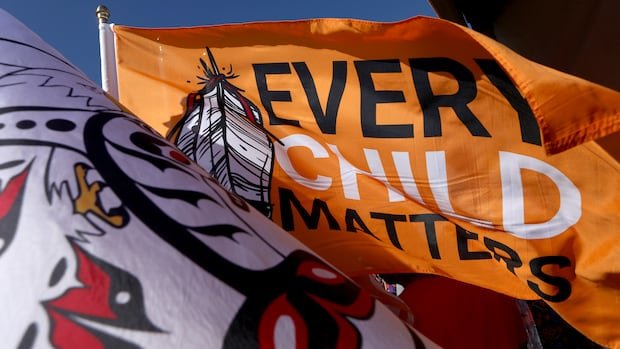

The federal government is currently engaged in a legal battle with the Anishinaabe First Nation over claims of chronic underfunding of on-reserve schools in Ontario, setting the stage for a potentially influential case. The Mississaugas of the Credit First Nation has put forth its arguments to the Canadian Human Rights Tribunal, alleging that Canada’s education funding model is insufficient, racially biased, and perpetuates the historical injustices suffered by children in residential schools.
Chief Claire Sault emphasized that while the case was initiated by one community, it represents the broader struggle of all First Nations children in Ontario. She highlighted the longstanding barriers faced by Indigenous students, stressing the urgent need for equitable access to quality education.
The tribunal, functioning as a forum for discrimination complaints, convened in person at the Mississaugas of the Credit location for the initial hearing. The First Nation contends that although residential schools have closed, the detrimental effects persist due to a severely underfunded education system imposed by arbitrary budget restrictions.
Central to the dispute is Canada’s “interim funding model” introduced as a temporary solution in 2019-20. The First Nation argues that this model fails to provide funding equivalent to the provincial system, neglects the unique needs of First Nations children, and overlooks the higher operating costs of on-reserve schools. This deficiency, as asserted in tribunal documents, results in children not receiving adequate services that address historical disadvantages and the necessity for culturally sensitive programs.
While Canada has yet to present its opening statement, it has responded in legal filings, acknowledging the enduring impacts of colonialism. However, the government challenges Mississaugas of the Credit’s interpretation of the funding model, asserting a lack of specific evidence demonstrating how it fails to meet students’ needs.
This legal challenge echoes a significant precedent established in 2016 when the tribunal confirmed Canada’s long-standing racial discrimination against First Nations children by consistently underfunding child and family services. This landmark case led to a substantial class-action settlement for victims and a proposed system reform offer, which was ultimately rejected by First Nations leaders in 2024.
The hearing, supported by the Canadian Human Rights Commission, underscores the fundamental right of Indigenous children to education, safeguarded by both international and Canadian laws. The proceedings are ongoing virtually and are anticipated to span 15 days.