
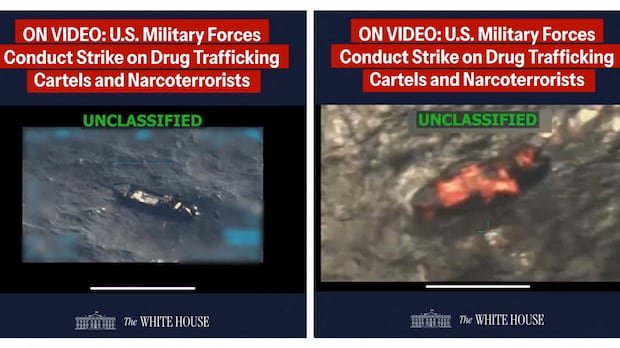

The U.S. military used a plane disguised as a civilian aircraft to carry out a strike on a suspected drug-smuggling boat near Venezuela’s coast last autumn. This tactic, not in line with military protocol, involved the plane concealing munitions within its fuselage instead of under the aircraft.
Revealed by sources familiar with the matter and validated by the Pentagon, the unconventional appearance of the aircraft raises concerns about the operation’s adherence to standard practices. Pentagon press secretary Kingsley Wilson cited mission-specific aircraft selection as the rationale for using both standard and nonstandard planes.
The U.S. Senate is gearing up to vote on a war powers resolution to restrict further military interventions in Venezuela without congressional approval due to recent events. President Donald Trump has been actively lobbying Republican senators to counter this potential limitation on his war powers.
The Trump administration has defended the boat strikes as part of an armed conflict with drug cartels in the region, labeling the boat operators as unlawful combatants. However, military guidelines expressly prohibit troops from posing as civilians during combat, a practice known as “perfidy.”
Amid mounting criticism, Defense Secretary Pete Hegseth faces Congressional inquiries regarding the legality of the strikes, particularly the follow-up attack that targeted survivors. Legal experts argue that targeting shipwrecked sailors goes against the laws of war, prompting calls for the release of unedited operation footage.
Senators were briefed on the classified legal justification for ousting Venezuelan leader Nicolás Maduro, with some expressing doubts about the operation’s lawfulness. While the White House’s rationale remains undisclosed, lawmakers question the administration’s long-term plans for Venezuela and its military involvement in the region.