
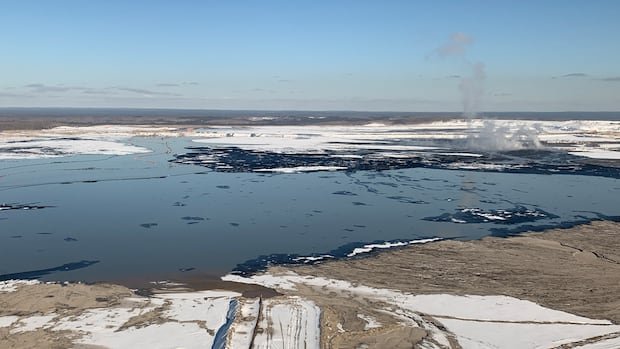

Indigenous leaders are raising concerns over a recent agreement between the federal government and Alberta that did not address water issues related to a proposed pipeline project. The agreement, aimed at facilitating the transportation of bitumen from Alberta to the B.C. coast, failed to acknowledge the substantial water consumption needed for bitumen extraction from the oilsands and the environmental risks posed by the tailings ponds left behind by oilsands operations.
The federal government established the Crown-Indigenous Working Group in 2021 to collaborate with affected First Nations and Métis communities in developing solutions to manage and clean up the contaminated tailings ponds. However, the absence of water-related provisions in the agreement with Alberta has raised concerns among Indigenous leaders.
One Indigenous water advocate highlighted in a recent report that by 2070, the area covered by tailings ponds in Alberta could surpass the territories of neighboring First Nations. This projection underscores the significant impact on water resources and the future well-being of Indigenous communities.
The Indigenous Services Minister’s recent hesitation to commit to including source water protections in a forthcoming clean drinking water bill has also drawn criticism from Indigenous leaders. The bill, which previously included source water protection measures but failed to pass before Parliament’s prorogation, faces opposition from provincial governments in Alberta and Ontario.
The only mention of water in the agreement with Alberta pertains to the potential pipeline route to the Pacific coast and the consideration of lifting the oil tanker moratorium for exporting bitumen to Asian markets. Coastal First Nations president Marilyn Slett raised concerns about the risks associated with potential oil spills and urged the government to prioritize environmental safeguards.
Indigenous leaders in Alberta are particularly worried about the history of tailings pond leaks contaminating water sources in their communities. Despite these concerns, there is skepticism about the government and industry’s commitment to environmental protection and water safety.
As water resources face increasing strains from industrial activities like oilsands extraction, advocates emphasize the urgent need for conservation efforts. The federal government has allocated funds for health studies to assess the impacts of oilsands operations on community well-being, particularly in downstream Indigenous communities along the Athabasca River.
Indigenous groups and environmental advocates continue to push for action on cleaning up tailings ponds and mitigating the environmental impacts of oilsands operations. Collaboration between government, industry, and Indigenous communities is crucial to address the challenges posed by water-intensive projects and ensure sustainable resource management for future generations.