
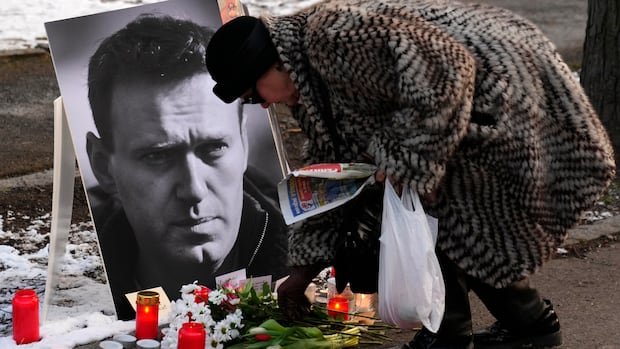

Russian opposition figure Alexei Navalny was reportedly poisoned by the Kremlin using a lethal toxin derived from poison dart frogs, according to statements from five European countries on Saturday. The foreign ministries of the U.K., France, Germany, Sweden, and the Netherlands stated that an analysis of samples taken from Navalny, who passed away on February 16, 2024, revealed the presence of epibatidine, a toxin typically found in poison dart frogs native to South America and not naturally occurring in Russia.
A joint statement from the five nations asserted that Russia had the capability, intent, and opportunity to administer this poison. They announced their intention to report Russia to the Organisation for the Prohibition of Chemical Weapons for violating the Chemical Weapons Convention. At present, there has been no immediate response from the organization.
Navalny, a prominent critic of official corruption and a key figure in anti-Kremlin protests, died in a penal colony in the Arctic in February 2024 while serving a 19-year sentence that he believed was politically motivated. British Foreign Secretary Yvette Cooper emphasized that Russia viewed Navalny as a threat and utilized this form of poison to showcase their reprehensible tactics and deep-seated fear of political opposition.
French Foreign Affairs Minister Jean-Noël Barrot expressed on a social media platform that the poisoning of Navalny indicates that President Vladimir Putin is willing to utilize biological weapons against his own people to maintain power. Navalny’s widow, Yulia Navalnaya, who has previously accused Putin of her husband’s poisoning, stated that she had always suspected foul play and now has concrete evidence to support her claims.
Epibatidine, the toxin discovered in Navalny’s samples, is naturally found in wild dart frogs and can also be synthetically produced in a laboratory. European scientists suspect that the substance used on Navalny was a lab-created version of this toxin, which acts similarly to nerve agents, leading to symptoms such as breathing difficulties, convulsions, seizures, a decreased heart rate, and ultimately death.
Navalny had previously survived a nerve agent poisoning in 2020, which he attributed to the Kremlin, though Russian authorities denied involvement. Following treatment in Germany, he returned to Russia and was promptly arrested, spending the final years of his life in prison. The U.K. has accused Russia of disregarding international bans on chemical and biological weapons, citing a 2018 incident in Salisbury involving the nerve agent Novichok, which targeted former Russian intelligence officer Sergei Skripal. British investigations concluded that the attack likely had high-level authorization from President Putin, a claim that the Kremlin has consistently refuted.