
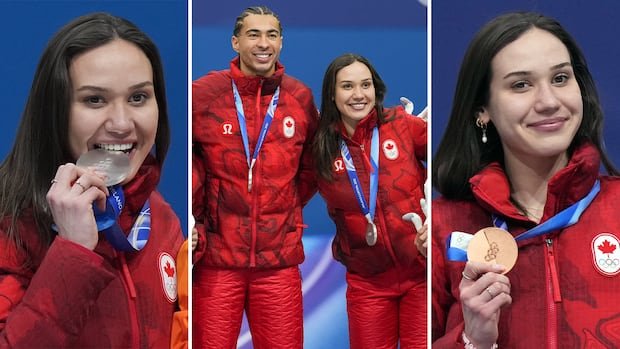


Enjoying the sun at the Olympic Village, Courtney Sarault proudly displayed her latest achievement — a silver medal in women’s short track 1,000 meters, adding to her previous silver and bronze wins in Milan. The hard work she dedicated to Monday’s race was evident as she sat next to her well-earned medal.
Being Canada’s most decorated athlete at the moment, Sarault is set to receive $55,000 upon her return: $15,000 for each silver medal, $10,000 for the bronze, and an extra $5,000 per medal from a foundation established by health-care technology entrepreneur Sanjay Malaviya.
While aware of the financial rewards that come with winning, Sarault was pleasantly surprised by the exact amount she would be receiving.
Comparatively, athletes from other countries like Italy, Poland, and Singapore receive significantly higher rewards for their Olympic achievements.
Italy, in particular, has been celebrating its athletes’ successes, with medallists receiving substantial monetary rewards as well as additional perks like cars, furnished apartments, and valuable gifts.
Unlike some countries, the Canadian government does not directly compensate athletes for winning medals; instead, the funds come from the Canadian Olympic Committee’s Excellence Fund, which channels corporate sponsorships to support high-performance athletes.
Adam van Koeverden, former Olympic kayaker and current secretary of state for sport, emphasized the government’s focus on investing in athletes and the sports ecosystem to increase medal-winning opportunities.
While national-team athletes receive a monthly stipend, medal bonuses are not standard practice in all countries like Norway and Great Britain.
“I think of it less as a reward and more as justice.”– Adam van Koeverden on medal bonus
Van Koeverden acknowledged the importance of recognizing and rewarding medallists, having advocated for financial incentives during his own competitive career.
Kelsey Mitchell, a gold medallist in cycling and now a bobsledder, highlighted the financial challenges faced by amateur athletes and the significance of monetary rewards in their careers.
For Mitchell, the financial incentives, though not the primary motivation, play a crucial role in supporting athletes in pursuing their sporting dreams.
As the debate on funding priorities continues, Canadian athletes like Sarault remain focused on their passion for their sport rather than the monetary rewards that come with success.