
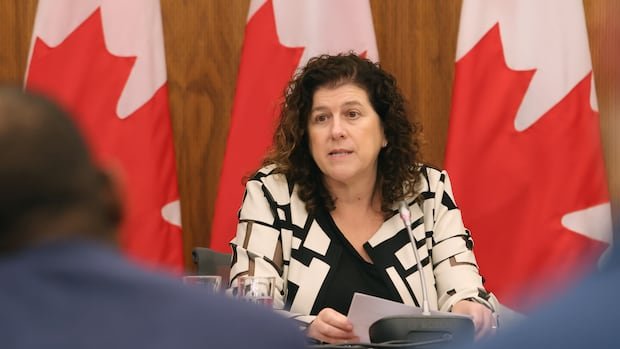

The federal government is moving forward with plans to replace the problematic Phoenix pay system with a new platform, although challenges such as a backlog and escalating costs persist, as outlined in a report presented by Auditor General Karen Hogan on Monday.
The audit revealed that the Treasury Board of Canada Secretariat (TBS) and Public Services and Procurement Canada (PSPC) are overseeing the pay transformation project in a manner that could yield benefits once fully implemented. However, the project is still in its early phases and is not projected to be completed for several years.
Hogan expressed concerns over the slow progress in simplifying intricate pay regulations, a crucial lesson from the failed Phoenix system rollout in 2016. She emphasized her worry that, after a decade, little advancement has been made in streamlining these rules. Consequently, the department is customizing the new Dayforce pay system, incurring an additional estimated cost of almost $4 million annually.
Despite efforts, a significant backlog of pay transactions persists, with over 233,000 transactions affecting more than 133,000 public servants unresolved as of September 2025. Hogan cautioned that if this backlog is not addressed before transitioning to Dayforce, existing errors could transfer to the new system, compromising its effectiveness from the outset.
PSPC has adjusted its strategy to tackle the backlog, prioritizing departments transitioning to Dayforce first. While this approach has reduced backlogs in some areas, auditors raised concerns that it could exacerbate delays elsewhere, noting that the decision to prioritize departments had not been thoroughly evaluated.
The report highlighted gaps in how the government measures pay processing timeliness, with key delays such as departments providing information omitted from current reporting rules. This incomplete picture fails to accurately depict how long employees must wait to resolve pay issues.
Following the audit period, in January 2026, the department accelerated its timeline for rolling out Dayforce by about three years, aiming to replace Phoenix with Dayforce for all departments and agencies by March 2031 instead of 2034. While this change intends to streamline operations and reduce costs, it raises concerns that the shortened timeline may limit testing, backlog clearance, and departmental preparedness for the transition.
In response, Public Works and Procurement Minister Joël Lightbound stressed the need for an “error-free” system before transitioning to Dayforce. He emphasized a step-by-step approach, starting with addressing backlogs at certain priority departments to ensure timely and accurate pay processing.
The report also raised concerns about the project’s cost, with initial estimates exceeding $4.2 billion, excluding departmental costs for transitioning to Dayforce. The government has yet to determine how potential savings in the new system will be measured.
The Phoenix pay system, launched in 2016, centralized pay processing for most federal employees but resulted in widespread issues such as underpayments, overpayments, and missed paychecks. In the 2024-25 fiscal year, the system processed over $38 billion in pay for more than 430,000 current and former public servants.
Hogan emphasized the importance of addressing longstanding issues, like simplifying pay rules and resolving the backlog, to prevent a recurrence of past failures as the government progresses towards Dayforce. The audit presented three recommendations for enhancing the transition from Phoenix to Dayforce, all of which were accepted by the federal government.