
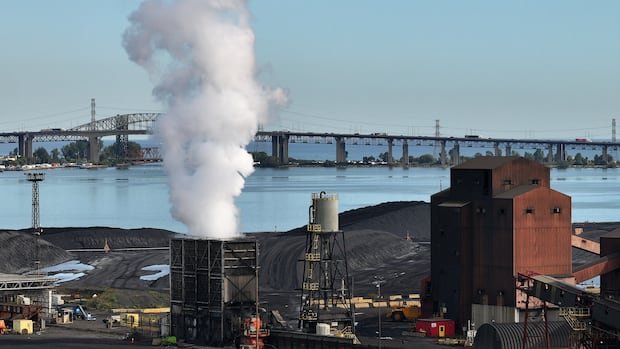

Two residents from Ontario are calling for a thorough evaluation and enhancement of a system they believe is ineffective in controlling air pollution from large industries. Ian Borsuk, who serves as the executive director of Environment Hamilton, and Crystal George, a lawyer and member of Aamjiwnaang First Nation near Sarnia, are preparing to submit a formal request for review to the Ontario government on Monday, in collaboration with the Canadian Environmental Law Association (CELA).
Expressing their concerns, Borsuk emphasized the necessity for intervention or a challenge to the existing system, noting that there is a misconception about the level of air quality protection present in Ontario. Their plea revolves around urging the province to reassess its “cumulative effects policy” established in 2018, aimed at imposing additional regulations to prevent the emission of cancer-causing substances harmful to human health by industries.
However, a recent report by CELA highlights that the policy has not succeeded in enhancing air quality in Ontario due to its limited scope and the government’s failure to integrate it effectively into the approval process. The report also points out a fundamental flaw in Ontario’s regulatory approach to air pollution, which focuses on contaminants facility by facility rather than considering the overall impact on communities over time.
The current policy is primarily applicable to the Sarnia and Hamilton areas, requiring new or expanding industrial facilities in these regions emitting benzene or benzo[a]pyrene to undergo a cumulative effects assessment. These cancer-causing contaminants are typically produced in processes like steelmaking, petroleum refineries, and chemical manufacturing. Despite this, the report indicates that numerous affected communities, pollutants, and established emitters are excluded from the policy’s coverage.
Borsuk raised concerns about the exemptions granted to many facilities, allowing them to exceed the province’s air regulations through various waivers like site-specific standards and technical exemptions. The promise of a review of the cumulative effects policy within two years by the province remains unfulfilled, as highlighted by CELA.
The applicants are advocating for an expansion of the policy to safeguard residents in Hamilton and Sarnia more effectively. They emphasize the importance of rectifying Ontario’s flawed air pollution laws and regulations, with MECP expected to respond to the review request in the coming months.