
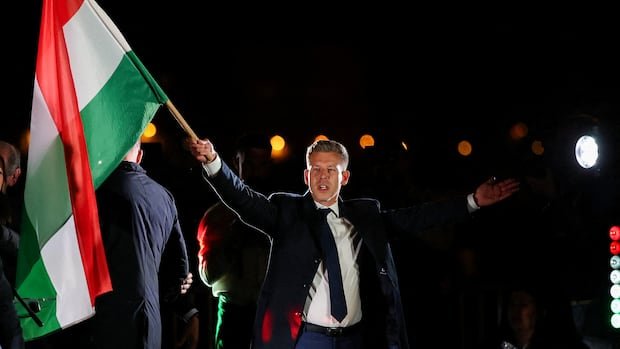

Péter Magyar, who as a child idolized Viktor Orbán during Hungary’s first democratic elections in 1990, recently ended Orbán’s 16-year tenure as prime minister in a historic election with record-high voter turnout. Magyar’s Tisza party, a center-right and pro-European Union group, defeated Orbán’s nationalist Fidesz party in the parliamentary election, securing a two-thirds majority in the 199-seat parliament.
Having grown up in a politically engaged Budapest family, Magyar was inspired by Orbán’s early advocacy for democracy when he demanded the withdrawal of Soviet troops in 1989. Reflecting on his childhood enthusiasm for the regime change, Magyar expressed his journey to prominence following his ex-wife’s resignation from political positions amid a scandal.
Magyar distanced himself from Fidesz, accusing the ruling party of corruption and propaganda, leading to his party’s remarkable success in the 2024 European elections. The implications of Orbán’s defeat extend beyond Hungary, impacting Europe’s populist movements and relations with Russia and the United States.
Unlike Orbán’s illiberal approach, Magyar aims to strengthen Hungary’s ties with the West, reduce reliance on Russian energy, and unlock frozen EU funds for economic recovery. While maintaining a firm stance on issues like migration and EU integration, Magyar’s diplomatic approach signals a potential shift in Hungary’s relations with the EU.
Drawing from Orbán’s political tactics, Magyar’s grassroots campaign resonated with Hungarian patriotism, leveraging social media and clear messaging to connect with voters. Magyar’s background in law, diplomacy, and public service, coupled with his personal interests in family and sports, paint a multifaceted picture of the new Hungarian leader.
Magyar’s rise to power signifies a departure from the past, embodying both continuity and change in Hungary’s political landscape.