
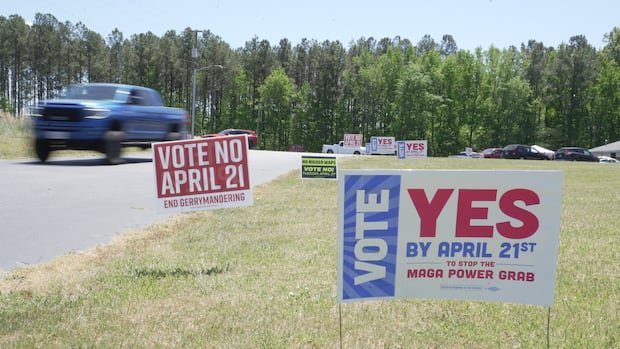

Virginia voters have approved a mid-decade redistricting plan that could enhance Democrats’ prospects of securing four additional U.S. House seats in the upcoming midterm elections. The endorsed constitutional amendment, narrowly supported by voters, circumvents a bipartisan redistricting commission. The state Supreme Court is evaluating the legality of the plan, potentially rendering the referendum results inconsequential. This development is part of a series of actions taken by various states following President Donald Trump’s initiation of a national redistricting dispute last year by advocating for the redraw of districts in Texas.
The intent behind Trump’s actions was to aid Republicans in winning more seats in the November elections and maintaining a slim House majority amidst typical midterm election challenges faced by the party in power. Redistricting has traditionally occurred every decade following a census, but this move represents a departure from that norm. Trump urged Virginians on social media to vote against the plan as a means to “SAVE YOUR COUNTRY!”
Democrats have framed the Virginia redistricting as a response to Trump, with Governor Abigail Spanberger emphasizing it as a countermeasure to other states’ attempts to favor Donald Trump in congressional elections. Former President Barack Obama featured prominently in ads supporting the “yes to redistricting” campaign.
Republicans have vowed to contest Virginia’s new map in court. The current composition of the House stands at a narrow 217-213 advantage for Republicans, with one independent aligned with the party. There are also four vacant seats due to resignations. Both parties are eyeing potential gains in various states through redistricting efforts. Democrats are optimistic about securing additional seats in California and Utah, while Republicans are targeting wins in Texas, Missouri, North Carolina, and Ohio.
In Virginia, Democrats presently hold six out of the 11 U.S. House seats under districts established by the state Supreme Court in 2021. The new plan could potentially enable Democrats to clinch up to 10 seats, with strategic alterations favoring Democratic strongholds in northern Virginia and diluting conservative voting blocs in other regions.
The redistricting frenzy is ongoing, with Florida’s Governor calling for a special session to review the state’s map, and the U.S. Supreme Court deliberating a voting rights case in Louisiana that may impact Democratic representation. The approaching midterm elections present a level of uncertainty, with a significant number of incumbents opting not to seek reelection, marking a level of turnover in Congress not witnessed since 1992.