
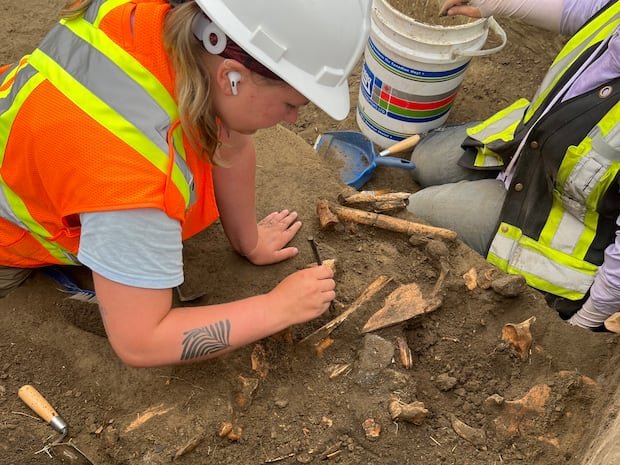

Around 240,000 artifacts uncovered at an archaeological site in Moose Jaw, Sask., shed light on the extensive human history in the Wakamow Valley. Archaeologists recently presented their latest discoveries at the Moose Jaw library.
Bill Strongarm, a member of the Federation of Sovereign Indigenous Nations from the Touchwood Agency Tribal Council, expressed satisfaction with the findings. He described the site as a significant traditional location used by the Saulteaux and Assiniboine people as a camping spot on their way to the Cypress Hills in southwest Saskatchewan. According to Strongarm, these tribes likely halted at the site for water, food resupply, and some may have even stayed over winter.
Strongarm emphasized the importance of conducting further research on Indigenous people and proposed the establishment of a heritage center to protect the area and its stories. He hopes that the discovery of these artifacts will enable a deeper understanding of how Indigenous communities adapted to their surroundings.
Alan Kojejbo, a senior archaeologist at Respect Heritage Consulting, revealed that archaeologists were called in due to upcoming highway construction that would impact the site. Kojejbo commenced work at the site in 2024, but previous landowners, Paul and Bill Davies, had conducted their own excavations in the 1950s.
The artifacts discovered at the site span periods before and after European contact, indicating human activity in the area for over 12,000 years. The collection includes stone and bone tools such as projectile points, scrapers, awls, knives, and some crafted from bison bones. Notably, the presence of plant and pottery remnants stands out as unique features of this site.
Pottery found at the site, which initially appeared to be from Missouri, was later identified through analysis as likely originating from southern Manitoba, Ontario, and Minnesota. Microscopic examination of plant residues on the artifacts revealed traces of wild rice, beans, corn, and squash, suggesting a combination of food cultivation and gathering practices at the site.
Kojejbo remarked on the rarity of such findings in southern Saskatchewan and acknowledged that more research is required to determine the origin and cultivation methods of the crops. The artifacts have been transferred to the Royal Saskatchewan Museum for further study and to deepen understanding of the site’s significance.
Overall, these discoveries not only validate the enduring presence of Indigenous communities but also underscore the rich history and cultural heritage of the region. Strongarm expressed pride in the sites and emphasized their importance in recognizing and honoring Indigenous heritage.