
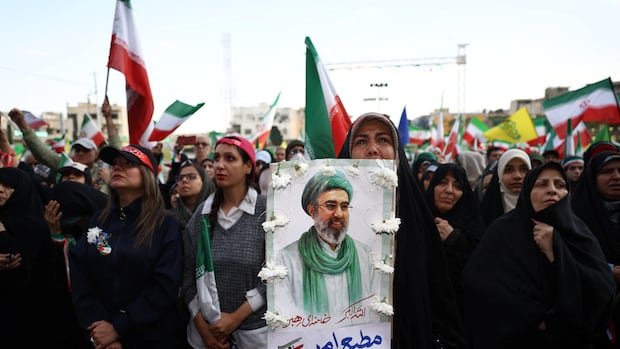

Iran issued a warning on Thursday, threatening severe retaliation against U.S. positions if the U.S. resumed attacks and reiterated its control over the crucial Strait of Hormuz, further complicating U.S. efforts to establish a coalition to reopen the water passage. The ongoing conflict, initiated by U.S.-Israeli strikes on Iran two months ago, has led to the closure of the strategic Hormuz sea channel, disrupting the flow of approximately 20% of the world’s oil and gas supply, as well as a significant portion of the global fertilizer supply and other resources that typically traverse the area.
The continued closure of the strait has resulted in a surge in global energy prices, raising concerns about a potential economic downturn. Despite a ceasefire in place since April 8, Iran has maintained its blockade of the strait, while the U.S. has implemented a naval blockade on Iran’s oil exports, a critical source of revenue for Tehran.
U.S. President Donald Trump is expected to receive a briefing on Thursday regarding potential military actions against Iran to compel negotiations for a resolution to the conflict. Reports of this briefing initially caused oil prices to spike, with the benchmark Brent crude contract reaching over $126 US per barrel before slightly decreasing to around $114 US. In response, a senior Iranian Revolutionary Guards official warned of “long and painful strikes” on U.S. regional positions in the event of any U.S. attack on Iran.
Iran’s new Supreme Leader Mojtaba Khamenei conveyed in a message to Iranians the country’s determination to maintain control over the Strait of Hormuz, vowing to eliminate any perceived threats to the waterway under new management. Khamenei emphasized that foreign entities have no authority in the region and predicted a prosperous future for the Persian Gulf region without American interference.
UN Secretary-General António Guterres cautioned that prolonged disruption in the strait could lead to global economic setbacks, increased inflation, and a rise in poverty and hunger for millions of people. The U.S. faces a deadline on Friday to either end the conflict or seek approval from Congress to extend it under the War Powers Resolution of 1973.
Plans to potentially deploy ground forces to secure part of the Strait of Hormuz for commercial shipping have been discussed, along with considerations of extending the U.S. blockade on Iran. Additionally, efforts are underway to establish an international coalition named Maritime Freedom Construct (MFC) to facilitate navigation through the strait post-conflict.
France, Britain, and other nations are in talks to contribute to the coalition, with Canada offering to provide cyber and logistical support along with de-mining expertise once a ceasefire is established. Trump’s Secretary of War, Pete Hegseth, criticized these discussions as lacking seriousness, emphasizing the need for tangible actions rather than mere dialogue.
The ongoing conflict between the U.S. and Iran revolves around Iran’s nuclear program, with Tehran insisting on its right to enrich uranium for peaceful purposes. Iran’s proposal to defer nuclear discussions until after resolving the conflict and shipping issues remains a contentious point in negotiations, with the White House likely to reject this stance.