
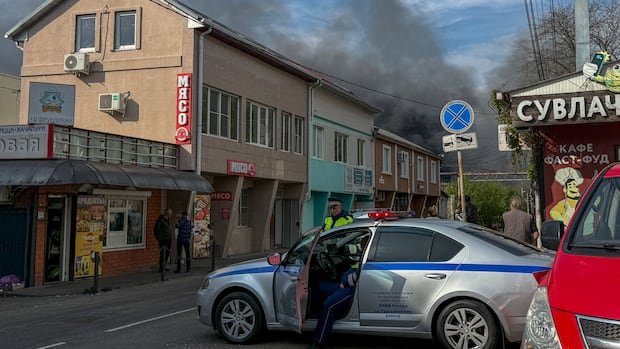

A recent Ukrainian drone attack targeted Russia’s Black Sea port of Tuapse, resulting in a fire at the city’s oil terminal, according to local officials. This incident, the fourth in a series of attacks in recent weeks, caused no injuries but disrupted daily life in the town located approximately 1,300 kilometers south of Moscow. As a precaution, authorities closed schools and advised residents to minimize outdoor activities and avoid consuming tap water.
The general headquarters in the Krasnodar Region reported that the drone strike by the Kyiv regime ignited a fire at the seaport terminal, prompting the deployment of emergency crews. A total of 128 firefighters and 41 emergency vehicles were mobilized to combat the blaze.
Following a state of emergency declaration on Tuesday due to a previous Ukrainian attack that led to a significant fire at the terminal, production was halted, and oil spills contaminated the coastal waters. Despite extinguishing the previous blaze by Thursday morning, the aftermath of the attack left Tuapse with oil-covered beaches and polluted air and waterways, illustrating the consequences of Ukraine’s escalating assaults on Russian energy facilities.
Emergency workers were dispatched on Thursday to clean up five additional oil-affected sections of the coast, with a total of 12,600 cubic meters of contaminated material already removed in Tuapse, as reported by the regional task force.
Residents were advised by the consumer safety watchdog Rospotrebnadzor to limit outdoor exposure and keep windows closed due to heightened levels of benzene in the air. Additionally, the local health authority recommended consuming only bottled water as a precautionary measure, while canceling May holiday celebrations.
Local residents expressed frustrations and concerns online, questioning official assurances about the situation’s control. Meanwhile, Ukrainian drones targeted an oil refinery near Perm and another in the Ural Mountains, approximately 1,500 kilometers from Ukraine. Kyiv has intensified efforts to disrupt Russian oil facilities, aiming to impact Moscow’s funding for the conflict in Ukraine.
The ongoing conflict between Ukraine and Russia has resulted in significant casualties and infrastructure damage, with both countries engaged in a prolonged war since Russia’s invasion of Ukraine in February 2022.