
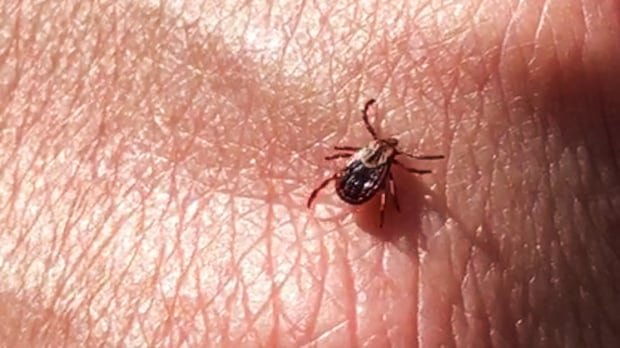

Applying woodchips on forest trails has been discovered by University of Ottawa researchers to significantly decrease local tick populations, as per a recent study. This low-tech approach could help lessen tick bites and the risk of contracting Lyme disease while walking in wooded areas.
The study focused on two locations within Ottawa’s Greenbelt: the Mer Bleue sector in the east and the Stony Swamp sector in the west. Researchers treated 20 trail sections, each 50 meters long, with either untreated woodchips or woodchips treated with the pesticide deltamethrin.
Results showed that using untreated woodchips reduced tick numbers by approximately 50%, while using pesticide-treated woodchips led to a 99% decrease in tick populations, according to researcher Katarina Ost. She emphasized that this approach could be particularly effective on wide, heavily used trails with high tick densities.
Woodchips deter ticks by disrupting their climbing behavior on vegetation, preventing them from latching onto hikers. Deltamethrin-treated woodchips do not pose a threat to pets since the pesticide remains fixed once applied. To protect against tick bites at home, creating a barrier of wood chips, mulch, or gravel around the lawn is recommended by federal health authorities.
Dr. Christopher Labos, an epidemiologist at McGill University, highlighted the importance of controlling insects at the source to prevent disease spread. While reducing tick populations may decrease Lyme disease cases, further research is needed to establish a direct correlation.
Labos stressed the significance of adhering to preventive measures like wearing protective clothing and using insect repellent when venturing off designated paths. Future studies could validate the impact of reduced tick populations on Lyme disease occurrences, providing valuable insights into effective disease prevention strategies.