

Amid Concerns Over Coral Decline, Restoration Efforts Show Promise
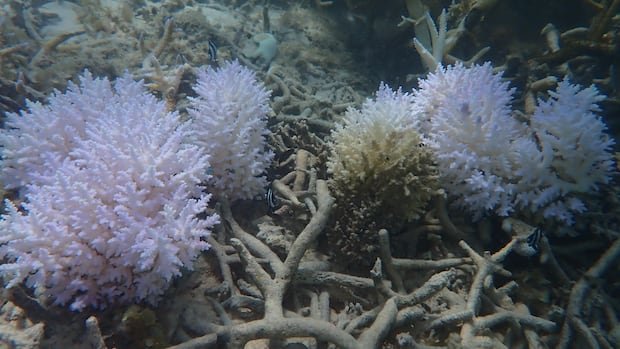
Nadeem Nazurally, an associate professor at the University of Mauritius, has witnessed a troubling sight while snorkeling off the coast of Mauritius. The once vibrant coral reefs, adorned in vivid hues of green, blue, and pink, have now transformed into a pale and eerie landscape.
The fading colors signify a significant issue, as these corals play a crucial role in safeguarding the island against cyclones and supporting various marine life forms essential for tourism and fisheries. Mauritius, boasting nearly 250 coral species and 150 kilometers of reefs, has experienced a substantial decline, losing approximately half of its coral cover since the 1970s due to bleaching events and a catastrophic oil spill in 2020.
The escalating ocean temperatures in the western Indian Ocean, fueled by climate change, have triggered unprecedented mass coral bleaching events. The Intergovernmental Panel on Climate Change (IPCC) has cautioned that coral reefs worldwide could face extinction if global temperatures surpass a 2°C increase from pre-industrial levels.
Nevertheless, restoration initiatives are offering hope. In 2019, the Mauritian government, in collaboration with scientists and NGOs, initiated a project funded by a $10 million US grant to restore three hectares of degraded reef by the end of the year.
The restoration efforts in Mauritius focus on two main approaches: sexual and asexual reproduction techniques. Sexual reproduction, known as coral spawning, involves the release of eggs and sperm into the water column, leading to the formation of larvae that develop into new coral colonies. Asexual reproduction includes methods like fragmentation, where broken coral branches grow into genetically identical colonies.
By establishing around 100 coral nurseries and transplanting over 100,000 coral fragments into the Blue Bay Marine Park, the restoration project has made significant progress in rebuilding the coral reef. Combining sexual and asexual methods has proven effective in accelerating reef recovery, with sexual reproduction producing more resilient corals due to the genetic diversity introduced into the reef.
Despite challenges, Mauritius has restored over 50% of its target area and seeks an extension to achieve its goal of restoring three hectares. The restoration efforts not only aim to protect the ecosystem but also preserve the cultural identity of Mauritius, deeply intertwined with its coral reefs.
The clock is ticking, but with ongoing efforts and commitment, Mauritius remains hopeful in its mission to rejuvenate its coral reefs and safeguard its marine heritage for future generations.