
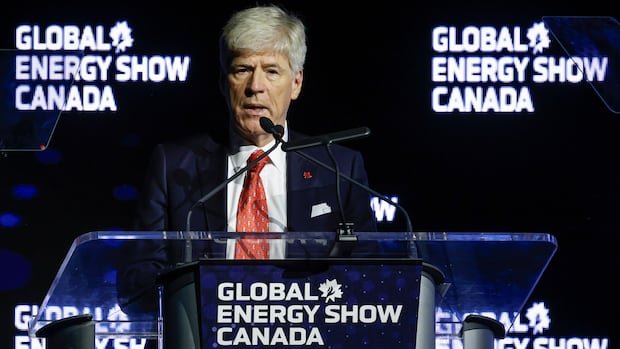

Federal Minister of Natural Resources, Tim Hodgson, delivered a message to international delegates at the Global Energy Show in Calgary, emphasizing Canada’s potential as a reliable energy supplier in a volatile global landscape. However, the CEO of a prominent oilsands producer expressed skepticism about Canada’s commitment, citing concerns over the conditions set for supporting a new West Coast oilsands pipeline, including the requirement for a multibillion-dollar emissions-reducing project and an industry carbon levy.
Addressing the conference attendees, Hodgson highlighted Canada’s reliability, democracy, and renewed openness for business amidst ongoing energy market disruptions due to conflicts in the Middle East. Emphasizing the interconnectedness of energy policy with economic, security, trade, and investment considerations, Hodgson affirmed Canada’s proactive stance in meeting global energy demands.
With an expected turnout of 30,000 attendees, this year’s Global Energy Show attracted a significant international presence, underscoring Canada’s efforts to strengthen its position as a dependable energy partner on the world stage.
The Alberta government aims to submit an application by July 1 to the federal major projects office for a proposed pipeline project to the northwest coast, a venture that currently lacks private sector backing. A comprehensive energy agreement signed between Alberta and Ottawa last year outlines the prerequisites for advancing the West Coast oil pipeline, hinging on the successful progression of the Pathways carbon storage initiative.
Jon McKenzie, CEO of Cenovus Energy Inc., commended the collaborative efforts of federal and provincial authorities but expressed reservations about the memorandum of understanding and the proposed carbon pricing framework, citing potential uncertainties for oilsands producers and investment prospects.
The Pathways project, spearheaded by Cenovus and other oilsands companies, aims to reduce carbon dioxide emissions by 16 megatonnes by 2045 through CO2 capture and storage activities in northeastern Alberta. However, concerns persist about the financial viability and overall benefits of the project, with McKenzie questioning the substantial costs involved and the marginal impact on global emissions.
McKenzie raised doubts about the feasibility of financing the pipeline project under existing conditions, pointing out the lack of substantial investments from Canadian oilsands producers due to regulatory challenges and competitiveness issues. The Alberta government targets designating the pipeline as a project of national interest by October, with plans to commence construction as early as September 2027.
In a panel discussion at the conference, Alberta Premier Danielle Smith acknowledged the challenges of translating commitments into tangible outcomes but expressed confidence in the mutual dedication of government stakeholders to achieve the project milestones, paving the way for increased business confidence and potential investments in the sector.