
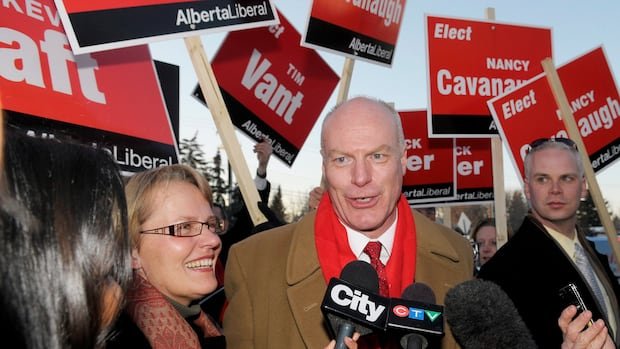

The Alberta Liberal Party has been distant from the limelight for an extended period. It has been over a century since the party held power, 14 years since its last significant tenure as the Official Opposition, and it has not secured a seat in the legislature in the past two elections.
During the previous election, the party had minimal participation, fielding candidates in only 13 out of 87 ridings and receiving a total of 4,259 votes, equivalent to 0.24 percent of the overall provincial vote. Stephen Carter, an experienced political strategist, views this as an opportunity for a substantial political transformation.
He envisions turning this somewhat forgotten party into a well-funded entity to combat separatism and address Premier Danielle Smith’s proposed referendum queries. While the party would technically retain its status, it may undergo a rebranding, shedding the Liberal title. Carter plans to reshape it into a financial mechanism to raise funds and conduct advertising activities on a larger scale than what a traditional third-party advertising group could achieve.
Unlike third-party advertising groups, political parties have a higher spending cap, with parties allowed up to $5 million annually compared to TPAs limited to $607,000. Additionally, parties can issue tax receipts for individual donations, an advantage over TPAs, although the maximum contribution limit remains at $5,000 for both entities.
Leading up to the referendum day, the Alberta Liberal Party would shift its focus from electoral preparations to serving as a hub for various advertising campaigns. It would allocate funds to groups advocating against separatism and other referendum topics proposed by Smith. Carter refers to this approach as a “constellation campaign,” aiming to support campaigns of all sizes effectively.
Every advertisement, whether online or broadcast, would bear the authorization of the Alberta Liberals or any subsequent name adopted by the party. While Carter’s initiative may lead to a name change for the party, current party officials are open to the idea of a new tagline rather than a complete name overhaul.
Despite some resistance within the party, Carter’s proposal appears to garner support from a significant number of backers, potentially reshaping the party’s direction. The plan is seen as a strategic move to align with the broader anti-separatist movement rather than a hostile takeover. Roggeveen, the current party leader, emphasizes the need to combat separatism, viewing it as a critical threat to Alberta’s future.
Carter’s strategy draws from his successful campaigning experiences and aligns with similar approaches used by other issue-focused parties in the past. The success of such a transformation will depend on the level of support Carter can rally within the party and from external allies. As discussions progress, the party’s fate hangs on the balance between maintaining its historical identity and adapting to meet new challenges in Alberta’s political landscape.