

An outbreak of avian flu has occurred in seven locations in British Columbia’s Fraser Valley this month, with six new cases emerging since last Thursday. Local farmers are taking extensive measures to safeguard their flocks against this highly pathogenic strain of avian influenza, as confirmed by the Canadian Food Inspection Agency (CFIA) on seven commercial poultry farms in Abbotsford and Chilliwack.
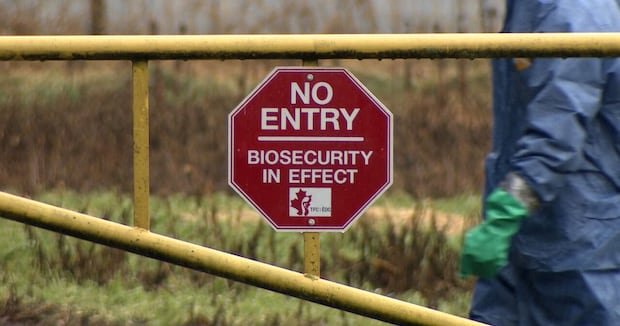
Mark Siemens, an egg farmer in the Fraser Valley, highlighted the escalating challenge posed by avian flu in the region, describing it as a recurring annual struggle for farmers to protect their birds’ health and safety. Biosecurity measures are rigorously enforced on all commercial farms in British Columbia, with birds confined to barns, farm entrances sealed, incoming vehicles disinfected, and workers required to change clothes and wear personal protective gear to prevent disease transmission.
Siemens, who faced an avian flu outbreak last year, expressed the emotional toll of such events, noting that all exposed birds on a farm must be culled, which he described as a traumatic experience for farmers deeply invested in caring for their chickens.
Shawn Hall, a spokesperson for the B.C. Poultry Association, explained that avian influenza is primarily spread by migrating waterfowl such as ducks, geese, and swans that travel along the flyway passing through British Columbia. While biosecurity measures have been effective in reducing risks, infections persist, prompting ongoing research collaborations with the province to explore additional preventive strategies, including air filtration in barns.
Hall reassured consumers that avian flu does not pose a food safety threat, emphasizing the stringent food safety regulations in Canada. He stressed that poultry products in stores remain safe for consumption despite the outbreak’s impact on poultry farms.
Both Hall and Siemens noted an increased risk of avian flu since 2022, with the CFIA reporting that approximately 8.8 million birds in British Columbia have either perished or been culled due to the highly pathogenic avian flu subtype, representing a significant portion of the nationwide impact on bird populations.
The severe consequences of a highly pathogenic avian flu outbreak on a farm were underscored by Hall, who stated that the disease spreads rapidly and is nearly always fatal for chickens and turkeys. He highlighted the devastating effects on small, family-run farms in British Columbia, which play a crucial role in providing locally sourced food to residents.
In conclusion, the avian flu outbreak in British Columbia’s Fraser Valley has raised concerns among farmers and industry experts, prompting heightened biosecurity measures and ongoing research efforts to combat the spread of this contagious disease among poultry populations.