
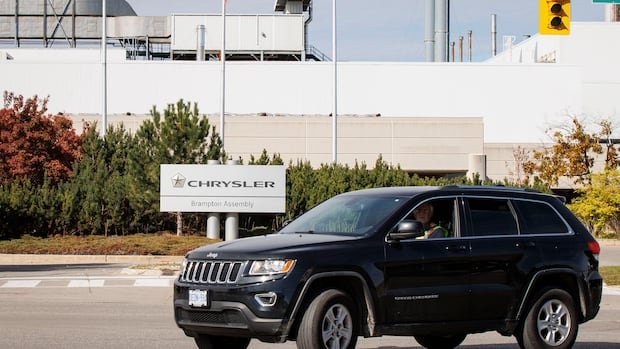

The federal government is taking action against Stellantis and General Motors by reducing the number of tariff-free vehicles they can import from the U.S. into Canada for sale. This decision, as initially reported by CBC News, means these automakers will now have to pay Canada’s retaliatory tariffs on a greater portion of U.S.-assembled vehicles.
The move is aimed at pressuring both companies to reinvest in Canadian production and workforce to regain their previous tariff exemptions and avoid substantial tariff expenses. In response to the automakers’ recent decisions to reduce manufacturing activities in Canada, the government emphasized that these actions go against their commitments to the country and its workers.
The government’s decision follows Stellantis’ announcement of plans to expand operations in the U.S., including relocating production of the Jeep Compass from Brampton, Ontario, to Illinois. Additionally, General Motors confirmed the discontinuation of BrightDrop electric delivery van production in Ingersoll, Ontario, due to demand constraints.
In April, the federal government offered exemptions to auto companies from Canada’s 25% retaliatory tariffs on the American auto sector. However, this exemption was contingent on the automakers maintaining vehicle production in Canada and fulfilling their planned investments. Failure to meet these conditions would result in a reduction of the number of tariff-free vehicles they could import from the U.S.
Finance Minister François-Philippe Champagne and Industry Minister Mélanie Joly jointly stated that Stellantis and GM have breached their legal obligations to Canada. Effective immediately, the government has decreased the quota of American-assembled vehicles that GM can import tariff-free by 24% and reduced Stellantis’s allowance by 50%.
While industry representatives like Flavio Volpe of the Automotive Parts Manufacturers’ Association support the government’s action, Huw Williams from the Canadian Automobile Dealers Association expressed concerns about potential price increases for Canadian consumers due to tariffs.
Unifor national president Lana Payne believes that Ottawa’s approach of using both incentives and penalties will be effective in dealing with the situation. She highlighted U.S. President Donald Trump’s aggressive tactics in pressuring corporations to relocate production to the U.S., which could adversely impact Canada’s industrial economy.
Prime Minister Mark Carney and Ontario Premier Doug Ford are closely monitoring the developments, with Carney emphasizing the importance of protecting Canadian workers and industries. Carney is also engaged in discussions with the Trump administration to mitigate the impact of American tariffs on various sectors, including steel and aluminum.
Despite ongoing negotiations between Canada and the U.S. to reduce tariffs on the auto sector, Conservative Leader Pierre Poilievre criticized Carney for allegedly failing to defend Canada’s auto industry in the negotiations. Both Stellantis and GM have yet to respond to requests for comments from CBC News.