
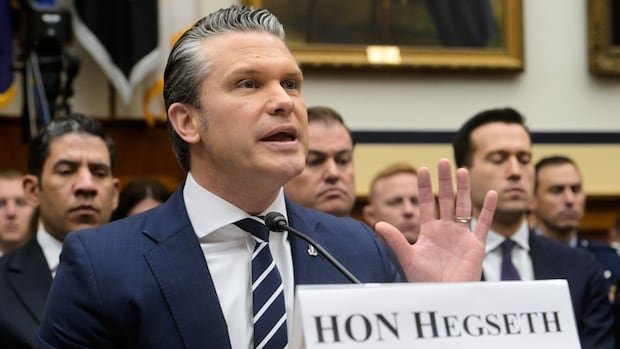

U.S. Secretary of War Pete Hegseth faced tough questioning from Democrats during his recent appearance before Congress regarding the ongoing costly conflict in Iran that lacks congressional approval. The Pentagon revealed that the war has already consumed $25 billion, discussed during a heated House armed services committee meeting primarily centered on the proposed 2027 military budget increase to $1.5 trillion.
While Republicans concentrated on military budget intricacies and backed the operation, Democrats swiftly shifted the focus to the escalating war expenses, significant depletion of essential U.S. munitions, and the tragic bombing of a school resulting in child casualties.
During a tense moment, Hegseth surprised Democratic Rep. Adam Smith by claiming that Iran’s nuclear facilities were destroyed in a previous attack, leading Smith to question the rationale behind initiating the war shortly after. Hegseth defended the war by stating Iran still harbored nuclear ambitions and possessed numerous missiles.
Acting undersecretary of war for finances, Jules Hurst III, disclosed the war’s cost breakdown, emphasizing substantial expenditures on munitions, operation costs, and equipment replacement. Democrats accused Hegseth of mismanagement and dishonesty regarding the conflict, stressing its adverse impact on the U.S. economy.
Republican Rep. Don Bacon expressed bipartisan concerns about personnel changes at the Pentagon, highlighting the importance of maintaining trust in military leadership. Hegseth defended his decisions as part of a broader effort to instill a stronger military ethos within the department.
As the war continues without congressional oversight since its launch on Feb. 28, negotiations for a ceasefire and potential congressional reauthorization remain paramount. The looming 60-day War Powers Act deadline on Friday signifies a critical juncture, with Republicans expressing confidence in Trump’s leadership amid the complex geopolitical landscape.
The head of the UN nuclear agency reported that a significant portion of Iran’s enriched uranium remains at the Isfahan nuclear complex, despite recent airstrikes. Iran’s nuclear arsenal and its potential weaponization remain key concerns, with ongoing international scrutiny on the peaceful nature of its nuclear program.
Iran’s uranium enrichment levels and nuclear stockpile raise international security concerns, with ongoing diplomatic efforts aimed at defusing tensions and averting further escalation. Hegseth emphasized the U.S.’s firm stance on Iran’s enriched uranium supply, underscoring the non-negotiable nature of preventing nuclear proliferation.
The developments surrounding the Iran war and nuclear program underscore the intricate geopolitical challenges and the imperative for diplomatic solutions to mitigate further escalation and ensure global stability.