
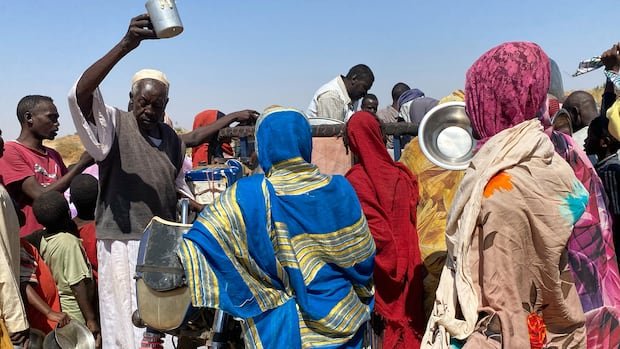

A hunger monitoring organization reported on Thursday that famine is becoming a more significant threat in additional regions of war-ravaged Sudan’s western Darfur area. The escalation of violence was highlighted by an assault on a military hospital in the southern part of the country by paramilitary forces, resulting in the deaths of 22 individuals, including the hospital’s director and three medical staff members.
The conflict in Sudan began in April 2023, stemming from a power struggle between the military and the influential paramilitary Rapid Support Forces (RSF). This conflict has led to what the United Nations identifies as the most severe humanitarian crisis globally.
The recent report from the Integrated Food Security Phase Classification (IPC) indicates that two more towns in Darfur have reached famine levels of acute malnutrition. However, the IPC has refrained from officially declaring a full-fledged famine in these towns. Previously, the group had noted famine conditions in El Fasher, the major city in Darfur.
In a tragic incident in the town of Kouik in South Kordofan province, an attack resulted in 22 fatalities, with eight individuals sustaining injuries, as per the Sudan Doctors’ Network. The network highlighted that such attacks have become recurrent in South Kordofan, rendering several hospitals non-functional.
The United Nations estimates that more than 40,000 lives have been lost in the Sudanese conflict, though aid agencies suggest the actual toll could be significantly higher, with over 14 million people displaced from their homes.
The IPC’s recent report revealed that towns like Umm Baru and Kernoi in North Darfur province are facing famine-level malnutrition. Alarming rates of malnutrition among children were reported, emphasizing the risk of increased mortality. The IPC has confirmed famine in seven areas since the onset of Sudan’s civil war but faces challenges in verifying famine thresholds due to limited access and data.
The fall of El Fasher to the RSF in October 2025 led to a mass exodus of people to neighboring towns, straining available resources and escalating food insecurity rates, according to the IPC report.
The ongoing conflict in Kordofan has disrupted food production and supply lines, increasing the risk of extreme hunger. The IPC emphasized the urgent need for a sustained ceasefire to prevent further suffering and loss of life in Sudan.
Famine criteria include specific indicators such as malnutrition-related deaths, food scarcity, and acute malnutrition levels among children. The IPC has previously confirmed famine in other regions, including Gaza, Somalia, South Sudan, and various areas in North Darfur and the Nuba Mountains.
Despite recent military advancements in Kordofan, clashes persist in the region following the siege in Kadugli and Dilling. International efforts are being mobilized to provide humanitarian aid to Sudan, with the establishment of a new Sudan Humanitarian Fund supported by contributions from the United States and the United Arab Emirates.
The U.S. administration announced a $200 million contribution to the initiative, part of a larger fund allocated for global humanitarian projects. The UAE pledged $500 million, with other countries expressing willingness to contribute.