

The U.S. military reported that its 20th operation targeting a vessel suspected of smuggling drugs resulted in the deaths of four individuals in the Caribbean Sea. This event occurred on Monday, as confirmed by a social media post from U.S. Southern Command, responsible for military activities in the Caribbean and Latin American regions. This latest incident brings the total casualties from these operations, which commenced in September, to 80. The Mexican Navy halted its search for a survivor from a strike in late October after four days.
A video shared by Southern Command displays a boat swiftly moving on the water before being engulfed in flames. The command stated that intelligence had verified the vessel’s involvement in illegal narcotics trafficking along a known route and carrying narcotics. This marks a departure from the usual practice of U.S. Defence Secretary Pete Hegseth of announcing such actions on social media, although he promptly reposted Southern Command’s announcement.
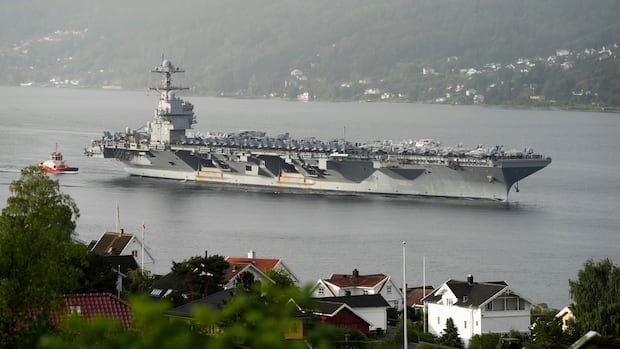
Simultaneously, the Trump administration is bolstering the U.S. military presence in the area by deploying the USS Gerald R. Ford aircraft carrier. This advanced warship is anticipated to reach the region shortly after traveling from the Mediterranean Sea. Hegseth officially named the mission “Operation Southern Spear” on Thursday, underscoring the increasing importance and permanency of the military’s operations in the region. Once the USS Gerald R. Ford arrives, the mission will involve nearly a dozen U.S. navy vessels and around 12,000 sailors and marines.
The administration has emphasized that the escalation of warships is aimed at curbing drug trafficking into the U.S.; however, no evidence has been provided to substantiate claims that those targeted in the vessels were “narcoterrorists.” The strikes have primarily targeted vessels in the Caribbean Sea but have also occurred in the eastern Pacific Ocean, a key route for cocaine smuggling.
Some analysts suggest that the presence of the aircraft carrier serves as a significant intimidation tactic against Venezuelan President Nicolás Maduro, who faces allegations of narcoterrorism in the U.S. Opinions differ on whether American warplanes might target land installations to pressure Maduro to resign.
U.S. Secretary of State Marco Rubio has disavowed Maduro’s leadership in Venezuela, accusing the government of collaborating with drug traffickers. Maduro has dismissed U.S. accusations, labeling them as a fabrication of a war against his regime. Venezuela has mobilized troops and civilians in response to potential U.S. actions.
President Trump has defended the operations by asserting that the U.S. is in a conflict with drug cartels and suggesting that the targeted boats are linked to foreign terror groups fueling drug trafficking in American cities. Lawmakers, including Republicans, have demanded clarification on the targets and legal rationale behind these operations.
Rubio and Hegseth recently briefed a bipartisan group of lawmakers overseeing national security matters, shedding light on the legal basis and strategy behind the strikes. The Senate rejected a proposal to limit Trump’s authority to launch attacks against Venezuela without congressional approval.
Overall, the escalation of military actions in the region has raised concerns and triggered debates regarding the legality and implications of such operations.