
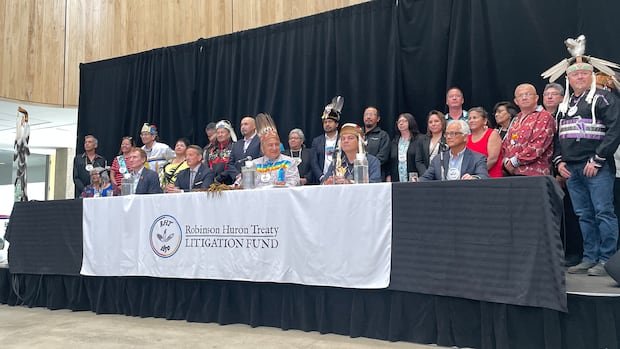

Lawyers who were denied legal fees exceeding $500 million by an Ontario court are now appealing the ruling, citing potential broader implications of the case. In 2023, legal representatives from Nahwegahbow Corbiere successfully negotiated a significant $10-billion settlement for 21 Anishinaabe First Nations due to breaches of the 1850 Robinson-Huron Treaty by the Crown.
Following this, two of the First Nations disputed the $510 million in legal fees claimed by their lawyers. In October 2025, a Superior Court of Justice verdict deemed the amount, calculated as a five per cent share of the settlement, as unjust and excessive, leading to a reduction of $487 million as ordered by Justice Fred Myers.
Recently submitted documents to the Court of Appeal by lawyers representing Nahwegahbow Corbiere argue that the court’s decision could have a “chilling effect” on other cases, especially those involving complex and prolonged legal battles for “under-resourced” groups. Brian Gover, a Toronto-based attorney representing the law firm in the appeal, highlighted the significant implications on access to justice for struggling communities, emphasizing the potential impact on cases that may not proceed to trial without such legal support.
Contingency fees, which are legal fees based on a percentage of the final settlement, are being scrutinized in light of cases like this. These agreements, common in personal injury and class action lawsuits, have come under scrutiny as more high-value cases emerge, potentially setting new standards for the handling of contingency fees moving forward.
Suzanne Chiodo, an assistant professor at Osgoode Hall Law School, noted historical debates surrounding the ethics of contingency fees but highlighted their crucial role in enhancing access to justice. The ongoing appeal is central to the discussion on the future of partial contingency fee arrangements, particularly in cases like the Robinson-Huron Treaty Litigation, where a partial contingency fee agreement was initially established.
Gover stressed that the unique nature of the agreement allowed the case to progress, emphasizing the shared risk between the clients and their legal counsel. The dispute over the fees, which resulted in a significant reduction, has raised questions about the fairness and reasonableness of legal fees in such complex cases.
The appeal proceedings are expected to shed light on unresolved issues regarding the reasonableness of fees and the fairness of contingency fee agreements. As courts grapple with these matters, the outcome of this case could provide valuable insights into the handling of similar cases in the future.