
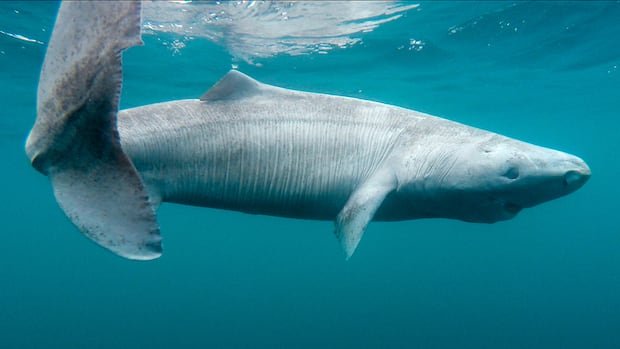

A rare and elusive Greenland shark was discovered washed up on the shores of northwestern Ireland, surprising zoologist Emma Murphy. The massive ocean dwellers are known for their elusive nature and typically inhabit the Arctic and North Atlantic oceans.
The National Museum of Ireland described the find as exceptionally rare, marking the first recorded instance of a Greenland shark stranded on Ireland’s coast. Despite its rarity in Irish waters, one scientist suggests that the species may have a more extensive range than previously believed.
The Greenland shark, known as one of the largest carnivorous shark species globally, can reach lengths of up to seven meters. It holds the title of the world’s longest-lived vertebrate, with some individuals estimated to live over 270 years, with one record-breaking shark believed to have lived for 400 years.
While the primary habitat of Greenland sharks is the cold waters of the Arctic and North Atlantic, shark scientist Dean Grubbs mentioned that Ireland falls within the known range of the species. Due to their mobility and preference for cold temperatures, these sharks have been spotted in various locations, including Belize and the Gulf of Mexico.
Given their deep-sea habitat, Greenland sharks are rarely observed by humans. The recent discovery in Ireland provided researchers with a unique opportunity to study the creature up close. The shark, a three-meter-long male nearing sexual maturity, was estimated to be around 150 years old and showed no signs of trauma or poor health.
The researchers plan to preserve the shark’s skin and skull for public display in the museum, ensuring that this remarkable creature can be appreciated by future generations.